
A sharp rise in silver’s open interest on Comex indicates the beginning of a new bullish phase.
Everyone looks at charts for clues of timing. But they are more helpful in identifying price trends after they have started than telling us when they are about to start. For that, we need to delve deeper into market actions.
The level of investor interest in precious metals has retreated to the point where it has almost ceased to exist. It has been like this for months, indicated by the level of open interest in silver on Comex, which is the black line illustrated below:
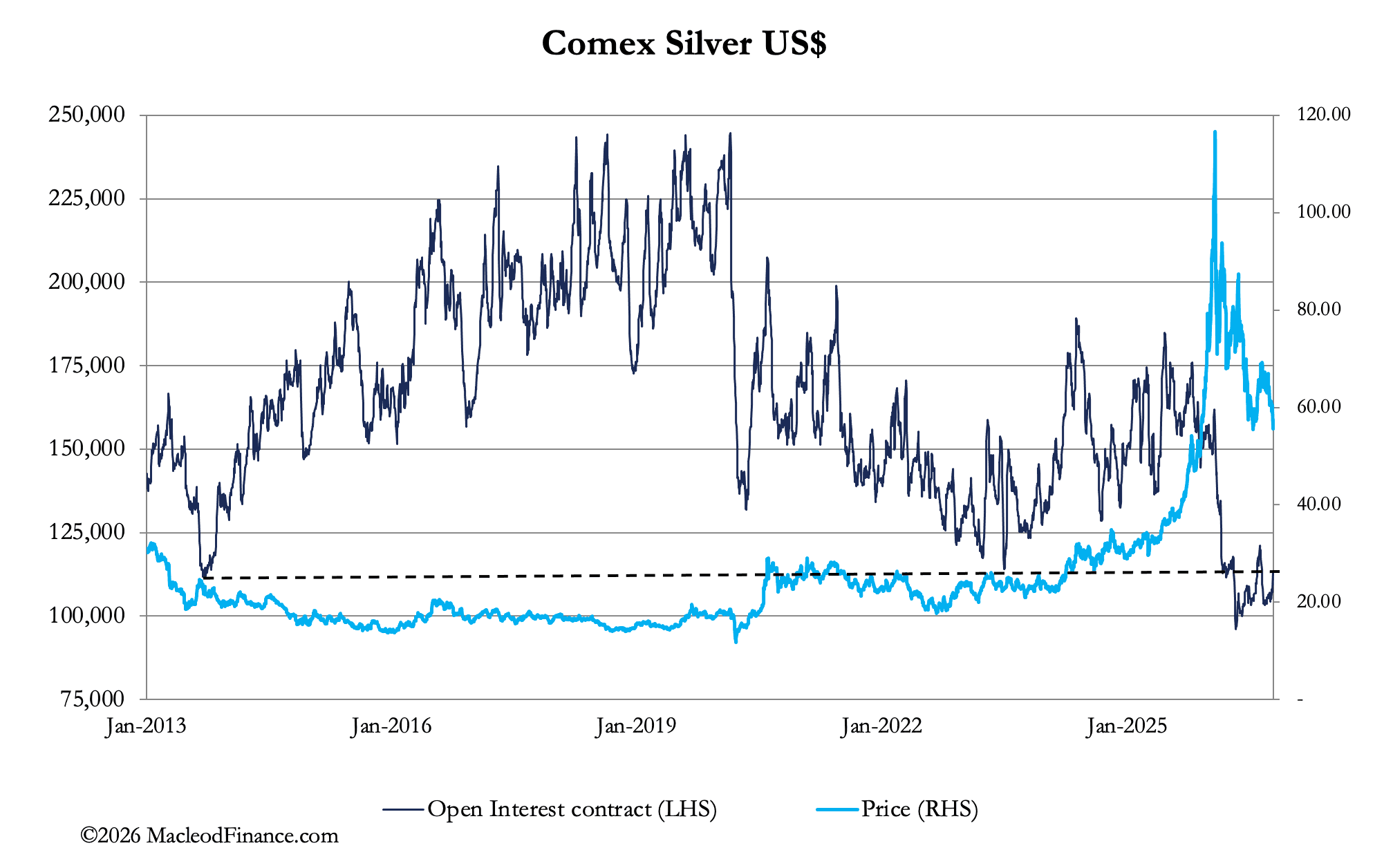
And no wonder: last May, open interest fell into deeply oversold territory, breaching levels last seen in September 2013. On Wednesday this week, there was a sudden increase in open interest of 4,589 contracts, which tells us that on the $3.50 markdown in the price, buyers emerged for 714 tonnes of paper silver.
Confirming the almost total absence of investor interest, the managed money category which is comprised of hedge funds and similarly regulated investment managers has long contract interest still at record lows for the last twenty years:
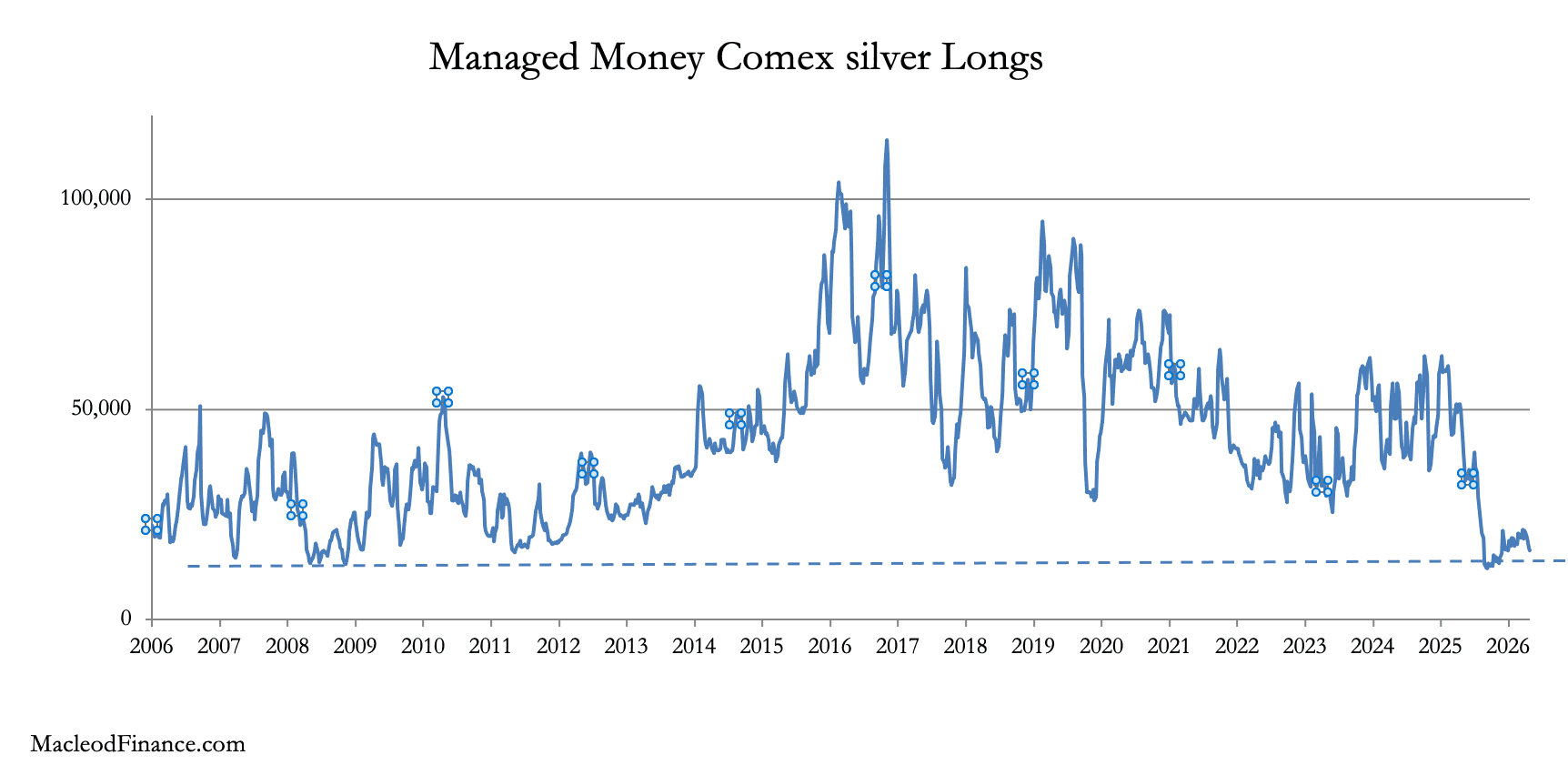
The way to read this development is that metaphorically the last silver bull left the building. Selling is over, and the odds favour market makers and bullion banks now face a developing bear squeeze as they return.
This is what Wednesday’s sharp rise in open interest is telling us. The situation is similar in gold, with its open interest deeply depressed:
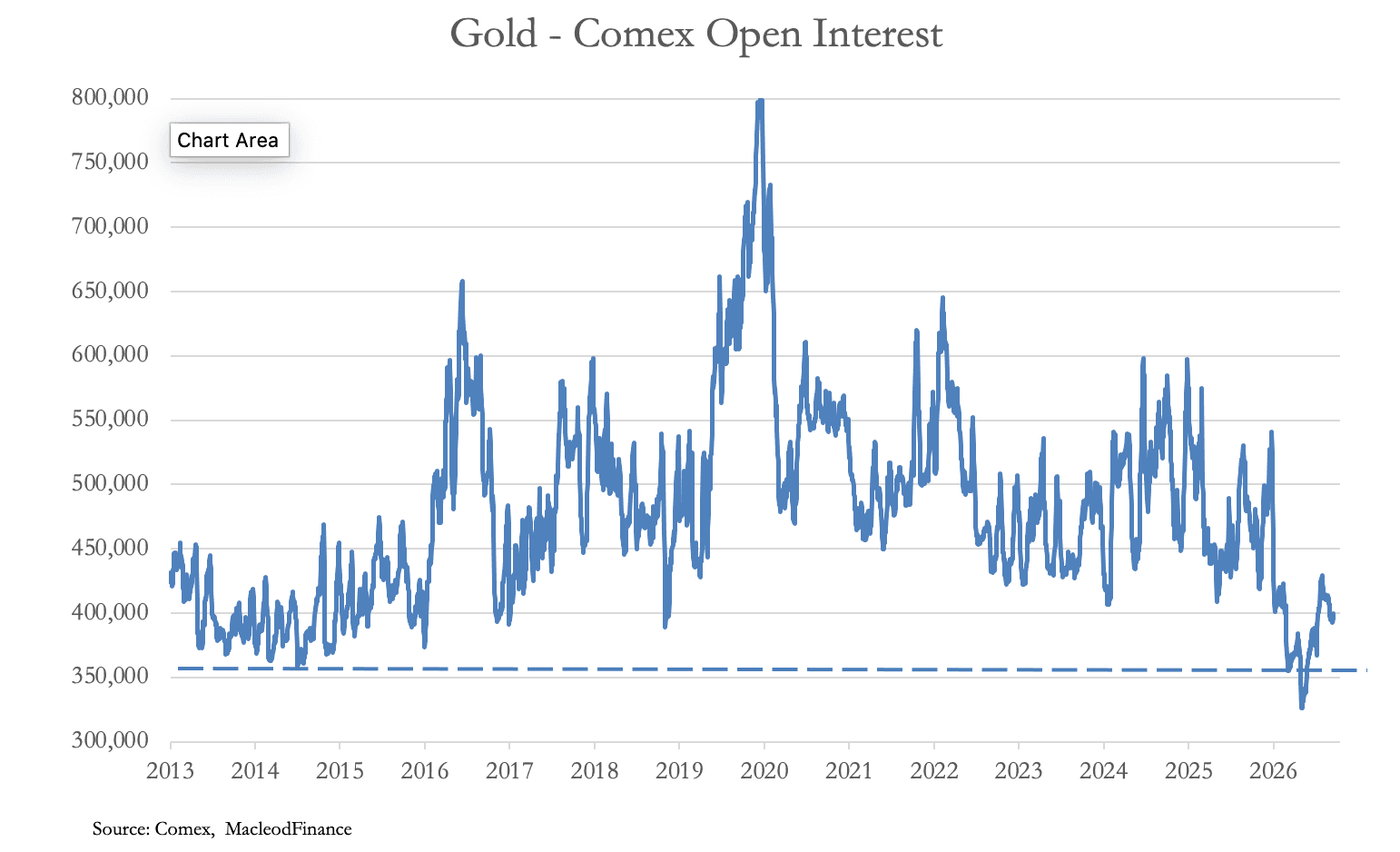
That said, the positions of the speculator categories are more balanced on a net long basis than is the case with silver. This is why the early signs of a move higher are reflected in silver ahead of gold.
Geopolitics
The outlook from here undoubtedly will be driven by geopolitics. The US agreement with Russia to provide some diesel in the coming months to the US and global markets has taken immediate pressure off financial markets, notably bond yields. The next chart is of the US 10-year treasury note yield:
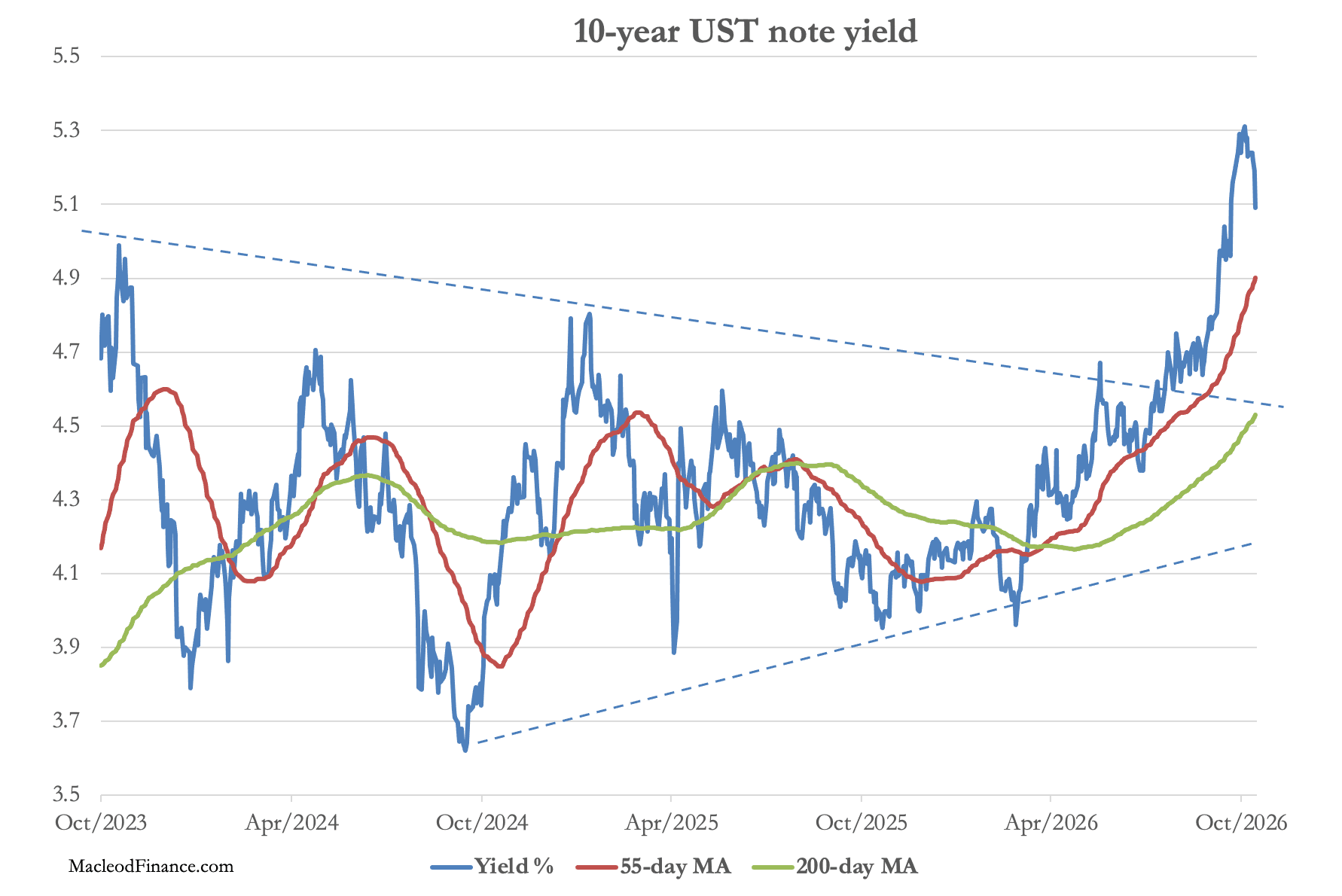
However, this is simply a normal consolidation in a rapidly rising trend which was just looking for an excuse to occur, suggesting it will be brief. When the yield resumes its underlying rising trend, it will take other G7 bond yields higher with it. Higher bond yields are simply a reflection of increasing risk in government finances, and those risks will escalate as the Middle East situation deteriorates, driving energy costs higher still.
Naturally, investors look at crude oil prices to gauge these risks, but in doing so they fail to recognise the real increase in the cost of a barrel of oil. The only buyers are refineries which extract oil’s derivatives. The value of these derivatives over the cost of a barrel is approximated in the 3-2-1 spread:
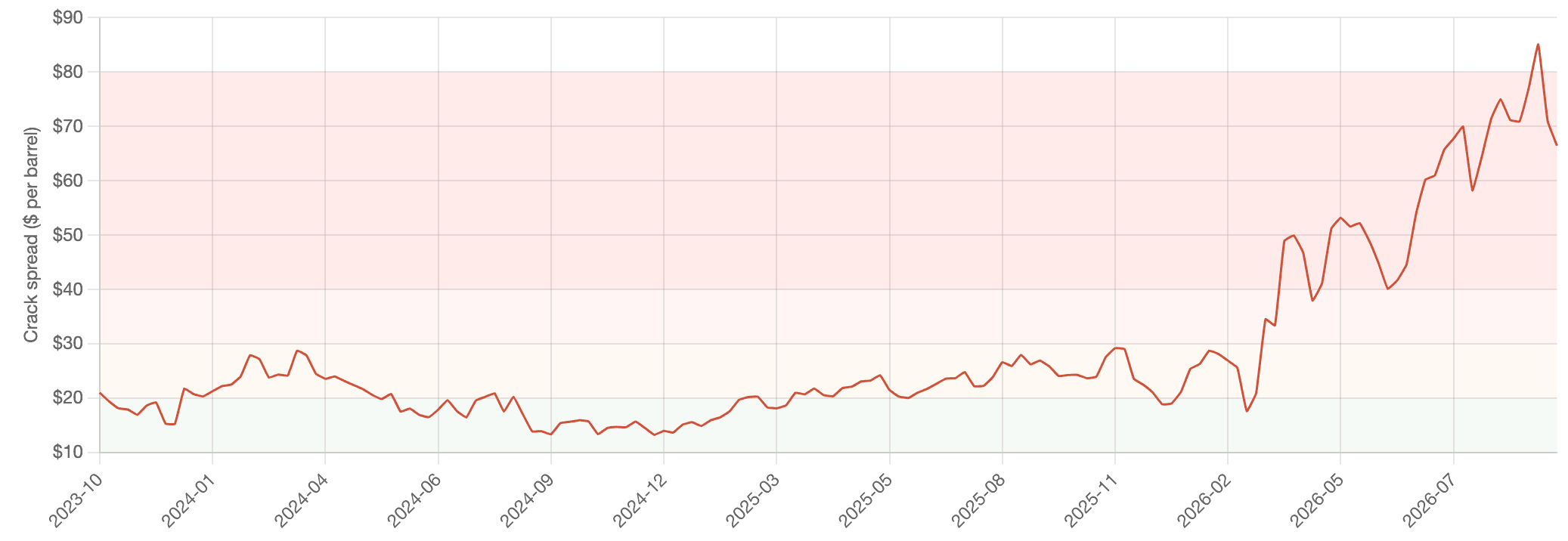
The spread has declined slightly from recent highs, but allowing for processing costs of about $15, this gives a value for a barrel of Brent at about $155, against a market price of $105 this morning. Since 3rd July when it traded at $72 (or $82 including processing margins), this represents an approximate doubling in the headline price, with further to go if the situation in the Middle East deteriorates further.
Markets appear to be underestimating the inflationary consequences. And far from improving or stabilising, the situation in the Middle East appears to be rapidly deteriorating. The Saudis have virtually ceased to sell any oil due to attacks on infrastructure by the Houthis and Iran’s selective Hormuz blockade. Not only is this economically catastrophic for the high-spending royal family, but its autocracy is now being challenged from within.
Additionally, all the evidence points to Iran preparing for a massive attack by the Americans, part of which will include widespread destruction of other Gulf producers’ energy infrastructure and also of Israel’s military establishments. These are dangers which are seemingly unavoidable, implying substantial risk to G7 government finances, their financial markets, and their currencies.
It is hardly surprising that in all this chaos ahead we can expect far higher gold and silver prices to materialise, starting from now.