
The Keynesians are about to learn a harsh lesson about credit risk and why gold is the escape mechanism.
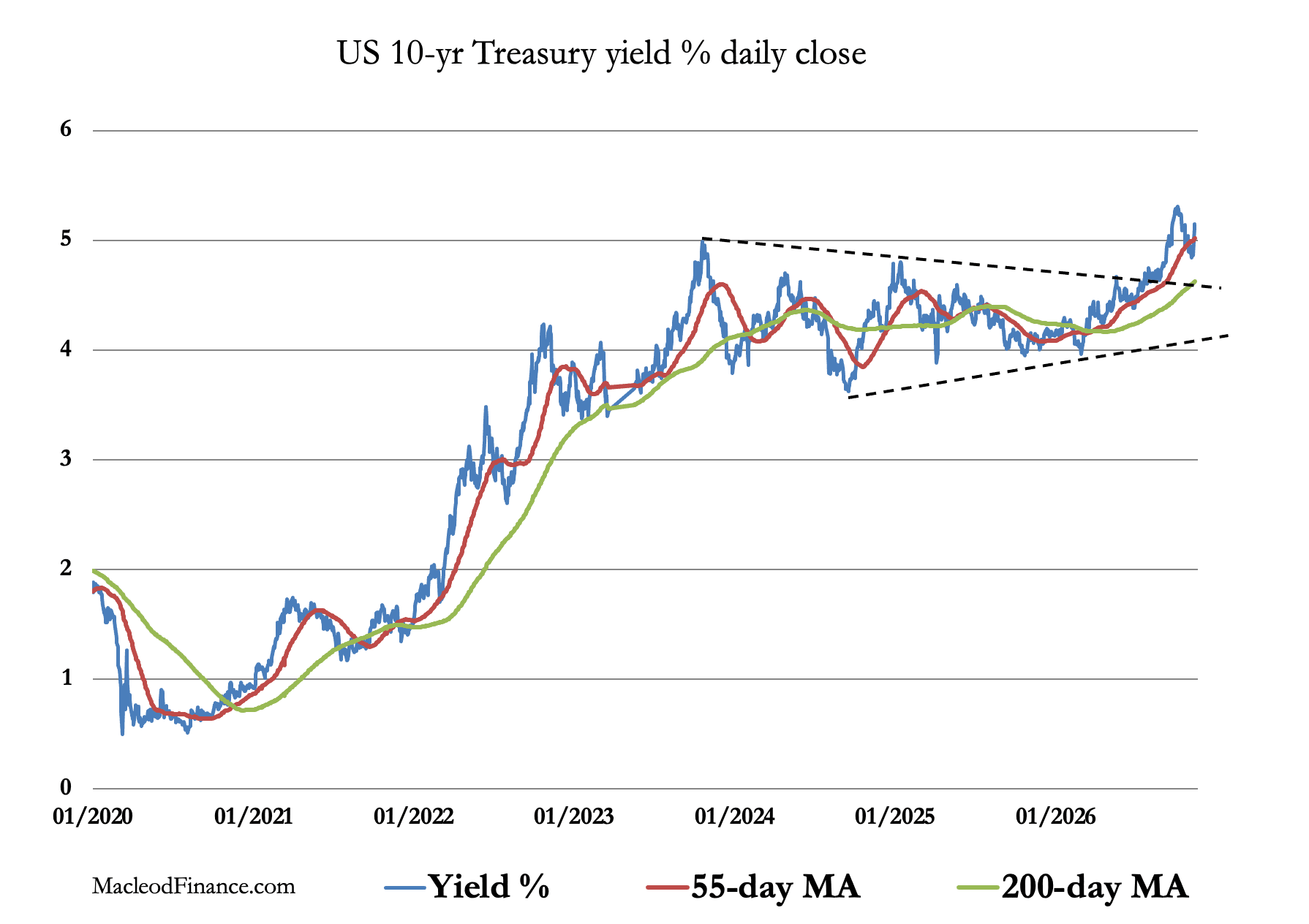
Suddenly, US bond yields are on the rise again. As the chart above shows, the tick back to 4.81% was a normal correction in an uptrend, having found support where one would expect. The investors who were duped last month into buying treasuries by a number of big brokers will be feeling somewhat sick.
Within the debt trap emerging for the US Government and the other G7s lie the seeds of currency destruction. But Keynesian driven markets are simply myopically looking at the surprise rise in bond yields as increasing the cost of gold ownership — hence the markdowns in gold and silver. Traders will have to simply sit through this nonsense until the so-called debasement trade is judged to be back on.
Higher bond yields are required to compensate dollar holders for loss of purchasing power. That loss comes from not just growing government budget deficits, but also from the US’s attacks against Iran, whose shipping remains badly disrupted, as the IMF’s charts of shipping transists and tonnage through the Straits of Hormuz shows:
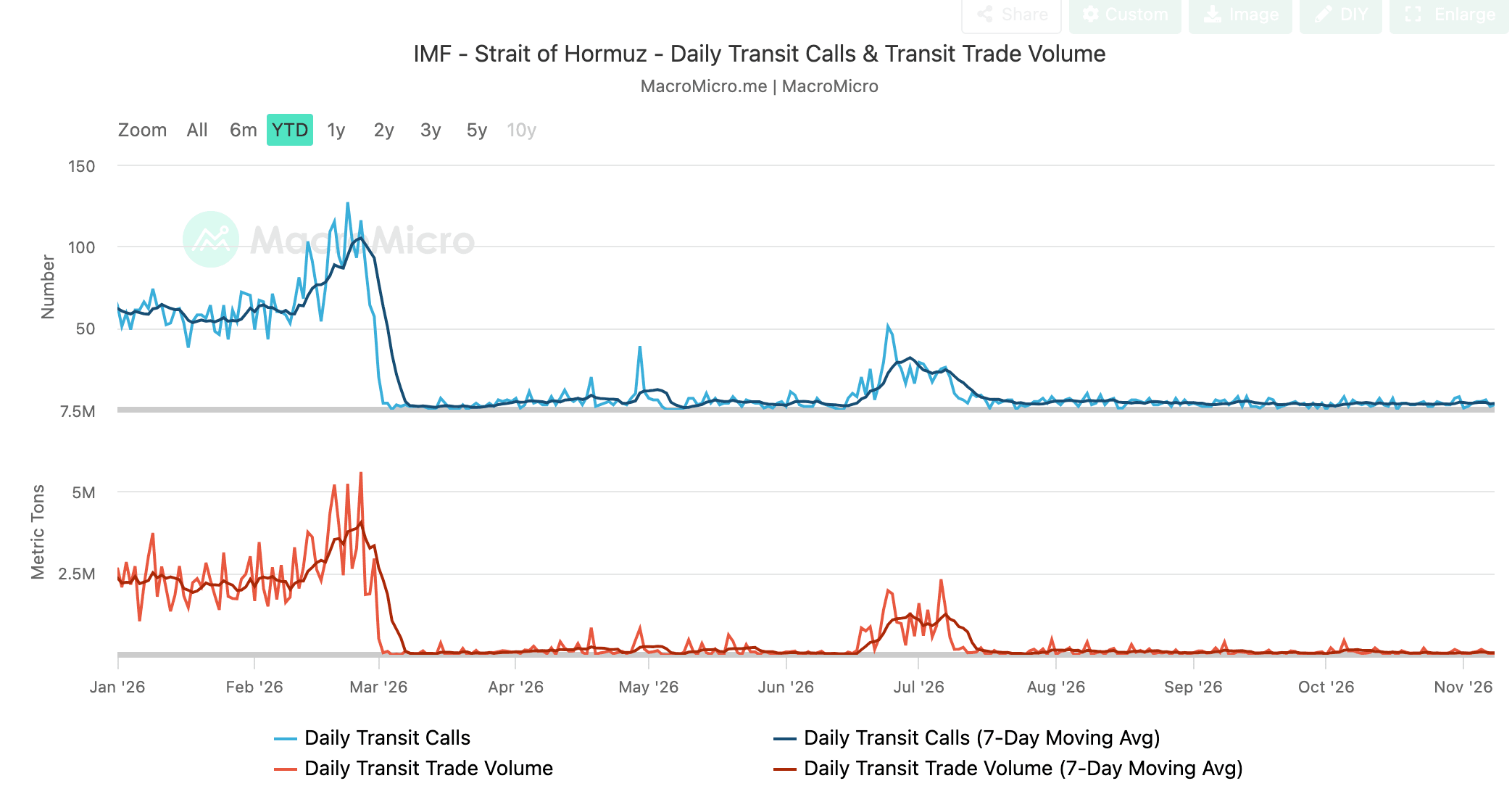
This is very different from the picture portrayed by the US’s claims that shipping has nearly returned to normal. Furthermore, we know, or should know that the Houthis have effectively closed the pipeline from Ras Tanura to Yanbu on the Red Sea by damaging pumping stations and the pipeline itself. About the only oil escaping the region is through the UAR’s pipeline to Fujairah with a maximum capacity of about 2mbpd.
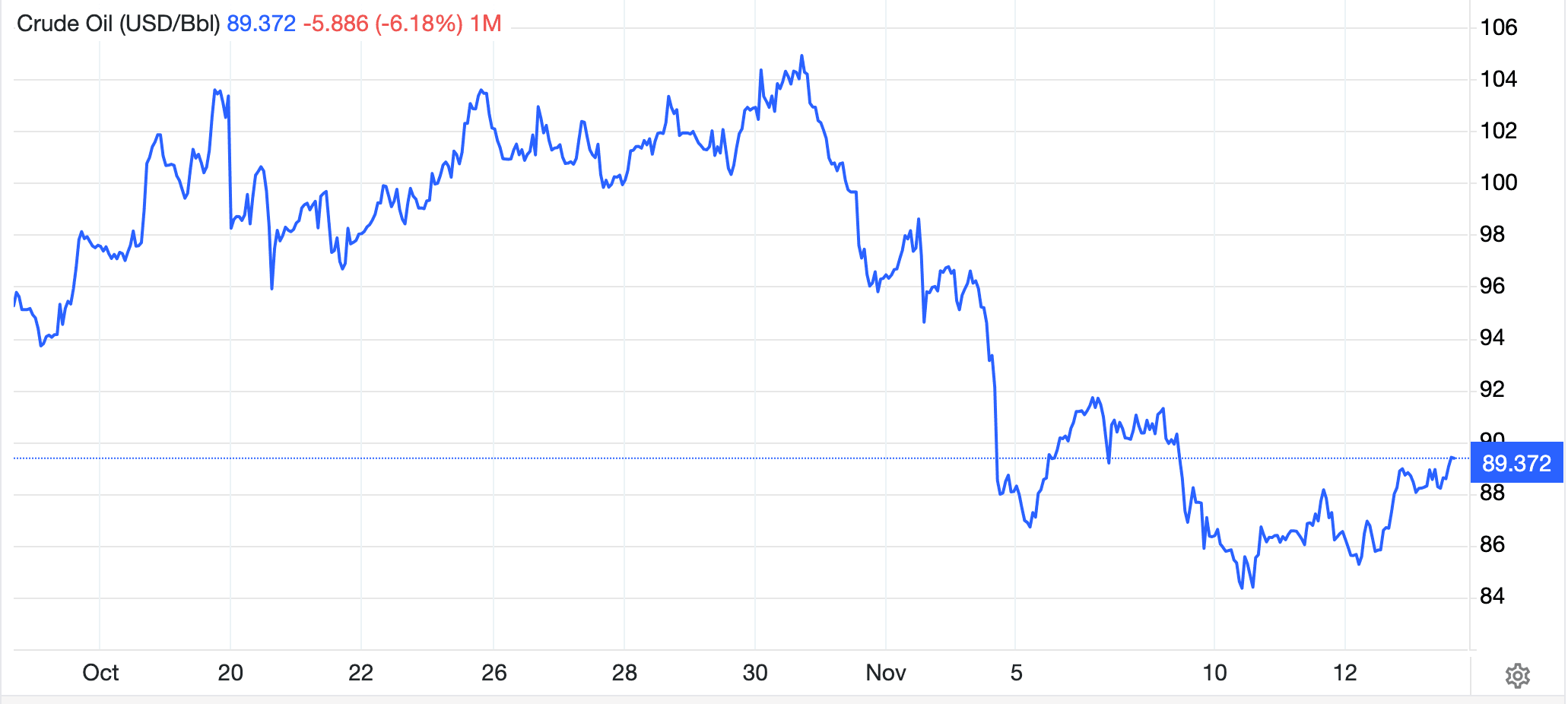
Yet, the oil price has declined over the last month, but now appears to be picking up slightly:
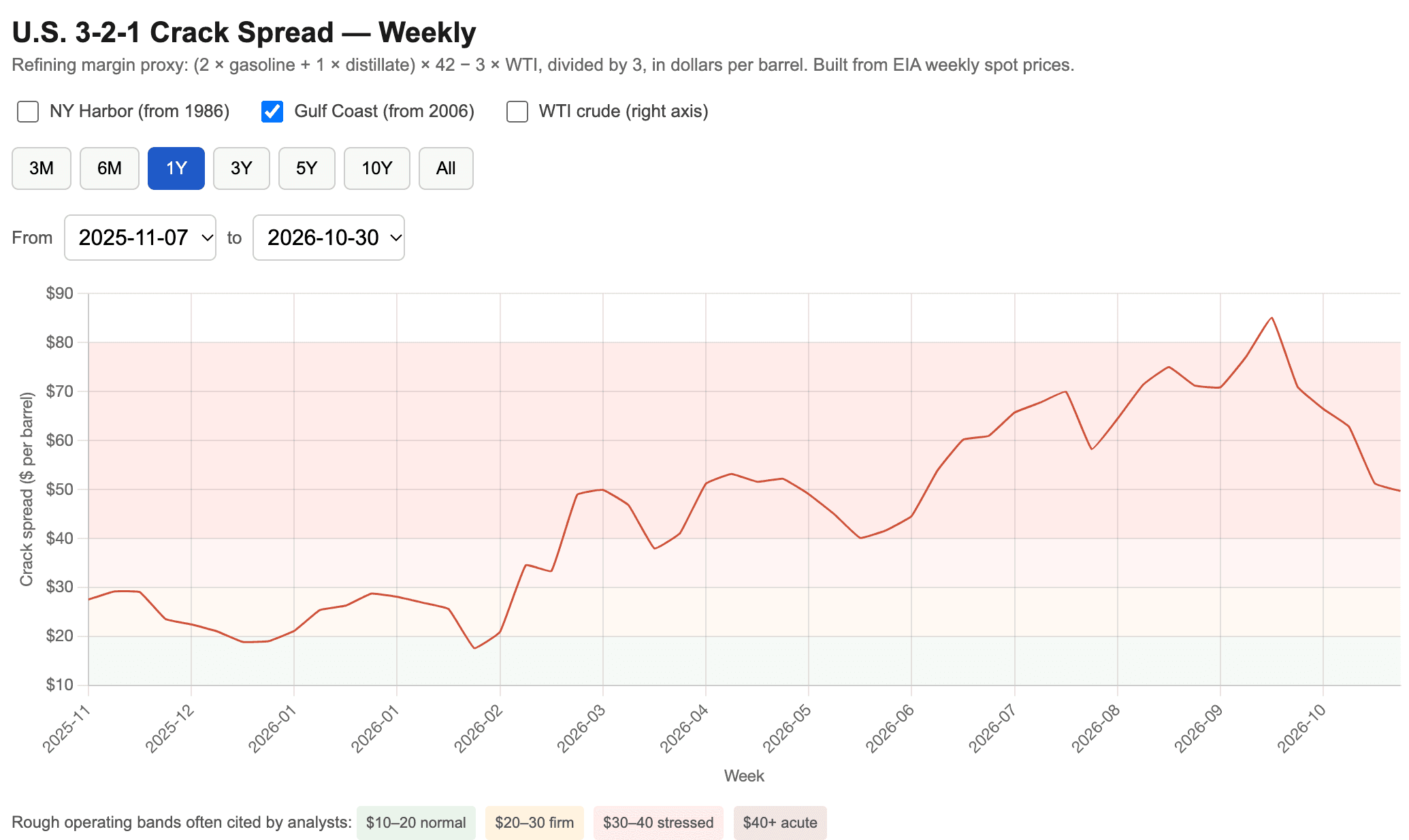
Also, the 3-2-1 crack spread has declined, though at $50 is still in acute stressed territory:
This is a report meant to be focused on gold. But it is important to understand how understated these destructive forces are in financial markets. They will wake up to a severe dose of price inflation, yet higher bond yields, and if the Fed is to concentrate on its inflation mandate, higher interest rates as well.
The problem for the Fed is that while consumer price inflation is due to go significantly higher because of the above factors, the consequences for the US and global economy will be to drive them deep into recession, or perhaps outright slumps.
Politics, which always determines these outcomes says that the Fed must rescue the economy. Furthermore, higher bond yields will almost certainly create a crisis in equities which are in an extended bubble. If that implodes, the negative feedback into economic activity in the non-financial economy will rival that of the 1932—1932 bear market, which lost 89% top to bottom, becoming a major driver of the Great Depression.
At some point in this process of rising bond yields markets will realise that events are leading to a destabilisation of credit values, and not of gold. Our guess is that a further rise in the 10-year US note yield towards 5.5% will be enough to tip the scales. That’s only 35 basis points above the current level and could occur in the space of not many days.
That being the case, we will almost certainly see gold and silver suddenly shoot higher. Bear in mind that they are as under owned as they have ever been, at about 0.3% of all North American portfolios.