
Few investors are interested in major upheavals facing global finances. Disinterest in summer is normal, but this is a time of maximum danger to personal wealth.
It is a fact that after 55 years of this fiat currency regime, the top 500 investment managers with an estimated $140—$150 trillion under management are clueless about money and credit. In 1919, Keynes wrote that “not one man in a million” is able to diagnose the destruction caused by debauching the currency. Plus ça change.
This is also true of the vast majority of precious metal dealers. If proof of this statement is needed, those who account for their dealings in gold and not in their fiat currencies are probably less in number than the fingers on your hand. In other words, they calculate their performance in credit, not money. Admittedly, they are made to do this for tax reasons by their debauching governments but none of them run parallel accounts in gold-grammes.
This is what ignorant investors see:
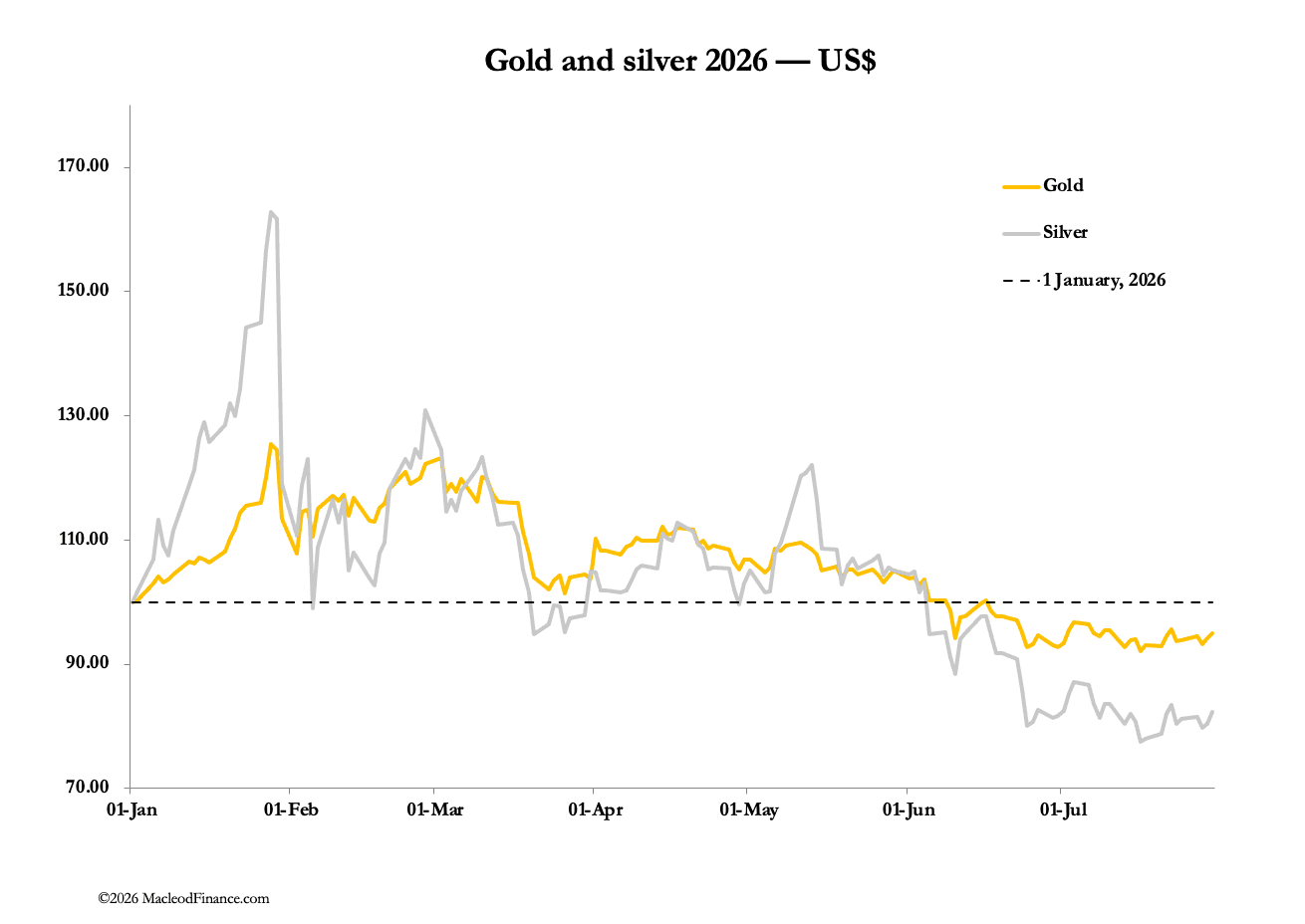
For them, gold and its PM cousin silver is losing them “money”. This is why sentiment is gloomy. But if they account in gold, they still have their gold and no credit risk. This is important, since without doubt credit risk is escalating. No chart tells you this, so technical analysis as commonly practiced is no guide, because all charts share the basic assumption of the clueless millions. All commodities, stocks, and bonds are always priced in national currencies, which are credit issued by government agents with their counterparty and hidden debauchment risk.
Note the following abbreviated list of problems which are undermining the fiat currency regime:
- For decades, Japan has been the major exporter of capital to other G7 nations. This is now reversing under “guidance” from her Finance Ministry.
- Acceptance of international trade settlement in Chinese yuan is accelerating, replacing the US dollar. China has all but told its banks to sell US Treasuries, saying they are too risky.
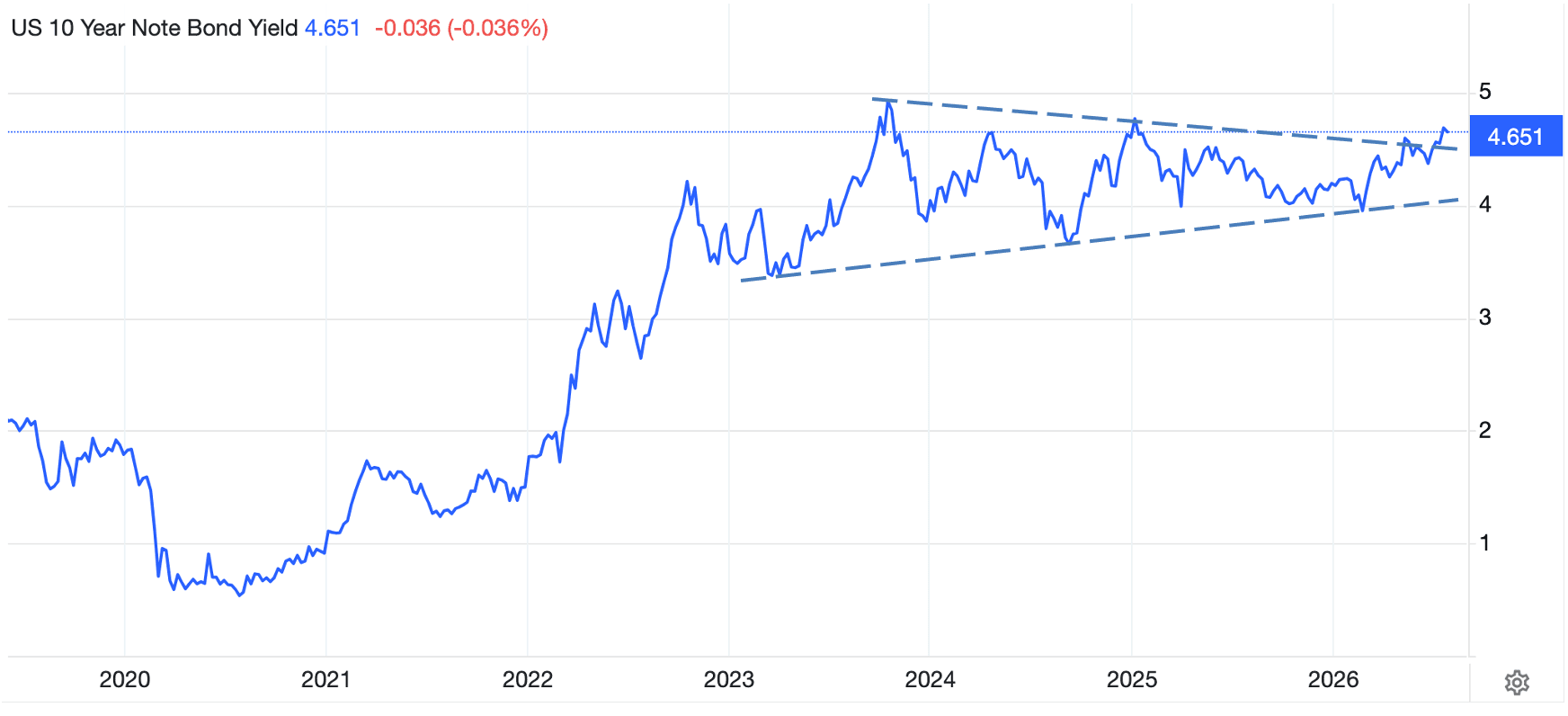
- Bond yields are now rising led by Japan and the US (chart below), springing debt traps and making bonds in these currencies effectively uninvestible.
- This appears to be less of a risk for euros because bond risk is spread among all EU nations. But with Germany’s economy contracting and both France and Italy facing debt traps this security is illusory.
- UK sterling faces a change of prime minister who promises to increase welfare spending. The UK’s tax burden is already showing signs of being unsustainable.
Meanwhile, oil exports from the Middle East are badly disrupted, which are bound to lead to higher prices for derivatives. The premium of derived components over the price of a barrel of sour crude is already about 70%. This disruption will not end soon, even if peace between the US and Iran is agreed tomorrow. Private sectors face credit deflation with bank loan and corporate bond risks increasing, while governments are committed to prevent a business slump by expanding currency-credit to support businesses and financial markets.
The point being missed by Keynes’s millions is that the rates of debauchment in G7 currencies are about to gain new impetuous. Bond yields are at the point of breaking higher. The chart below shows how 10-year maturities are leading the way:
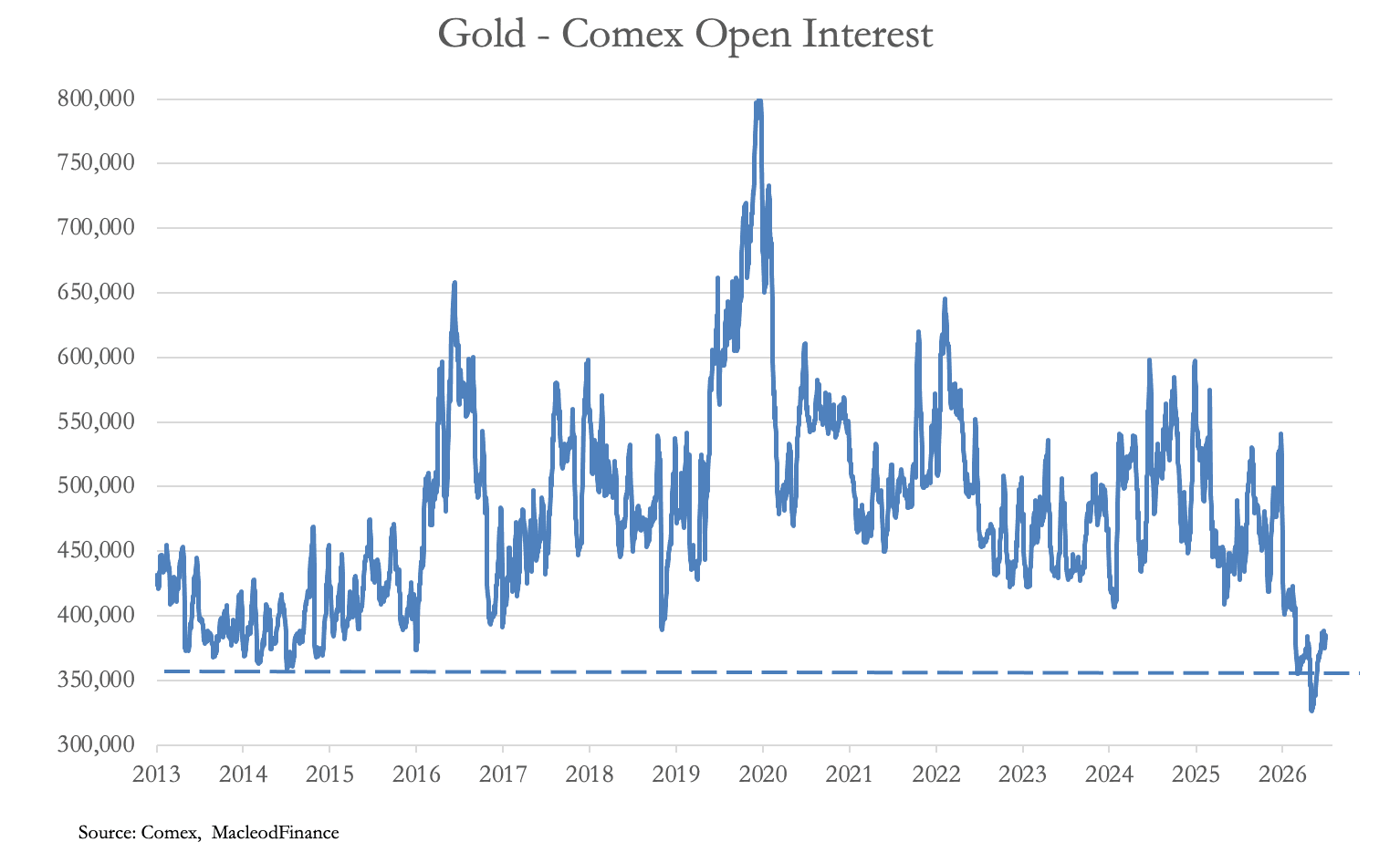
Meanwhile, open interest in gold and silver futures on Comex are at long-term lows. The chart below is that of gold:
Many central banks, led by China and Russia understand the risks to the dollar and other western currencies and are accumulating physical gold both in their official reserves and off-balance sheet. Russia has seen these currencies weaponised against it, and China sees US hegemony collapsing and the dollar with it, taking down all fiat currencies.
Yet, in the summer heat, western investors slumber on…