
The febrile condition of all asset markets headed by rising G7 bond yields is leading to uncertainty for gold and silver prices. One last sell-off is a golden opportunity for stackers.
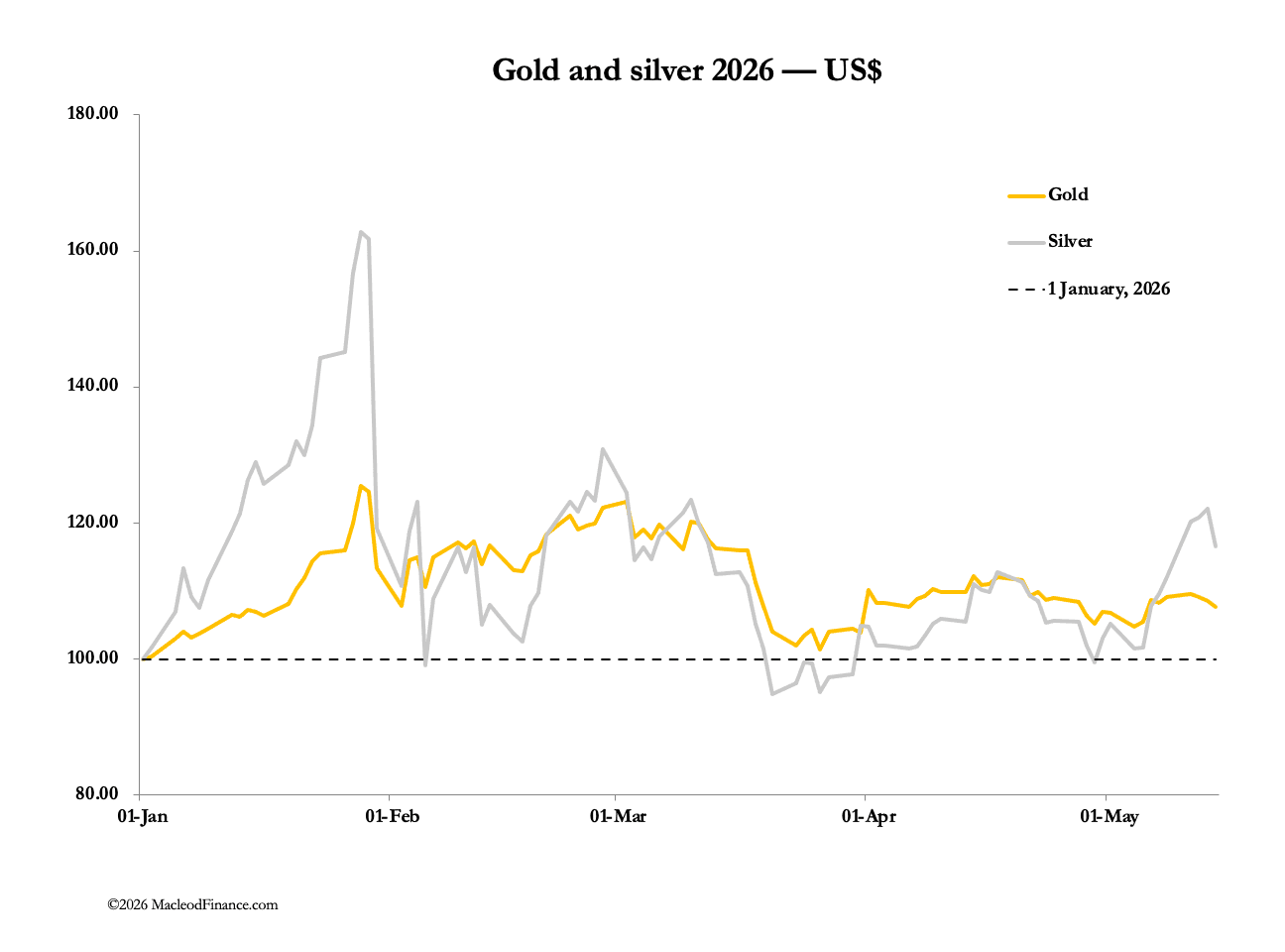
For the first half of this week, gold and particularly silver prices rose before being hammered yesterday and this morning. In overnight Asian trade, gold was $4582, down $95 from last Friday’s close, and silver at $79.20 was down $1.00. A 16,556 jump in gold’s preliminary open interest on Comex yesterday suggests active shorting by hedge funds, while open interest in silver declined by 2,270 confirming that it was gold/$ pair traders in action.
While preliminary open interest figures see some revision before being final, this selling when gold’s contract is already oversold is consistent with a final sell-off. The swaps, being mainly market makers and bullion bank trading desks which take the short side will be delighted, because they know from the quality of buying both in New York and London that they must try to achieve and maintain level books.
This sudden bearishness on the part of hedge fund traders is linked to this week’s inflation shock, with April’s accelerating to 3.8% from March’s 3.3% driven mainly by energy costs. That this should prove a shock is an indictment of sleepy markets, but traders have now been alerted to the severe consequences of oil prices rising and US reserves depleting.
Bond yields are rising in sympathy, as the chart of the US 10-year treasury note shows:
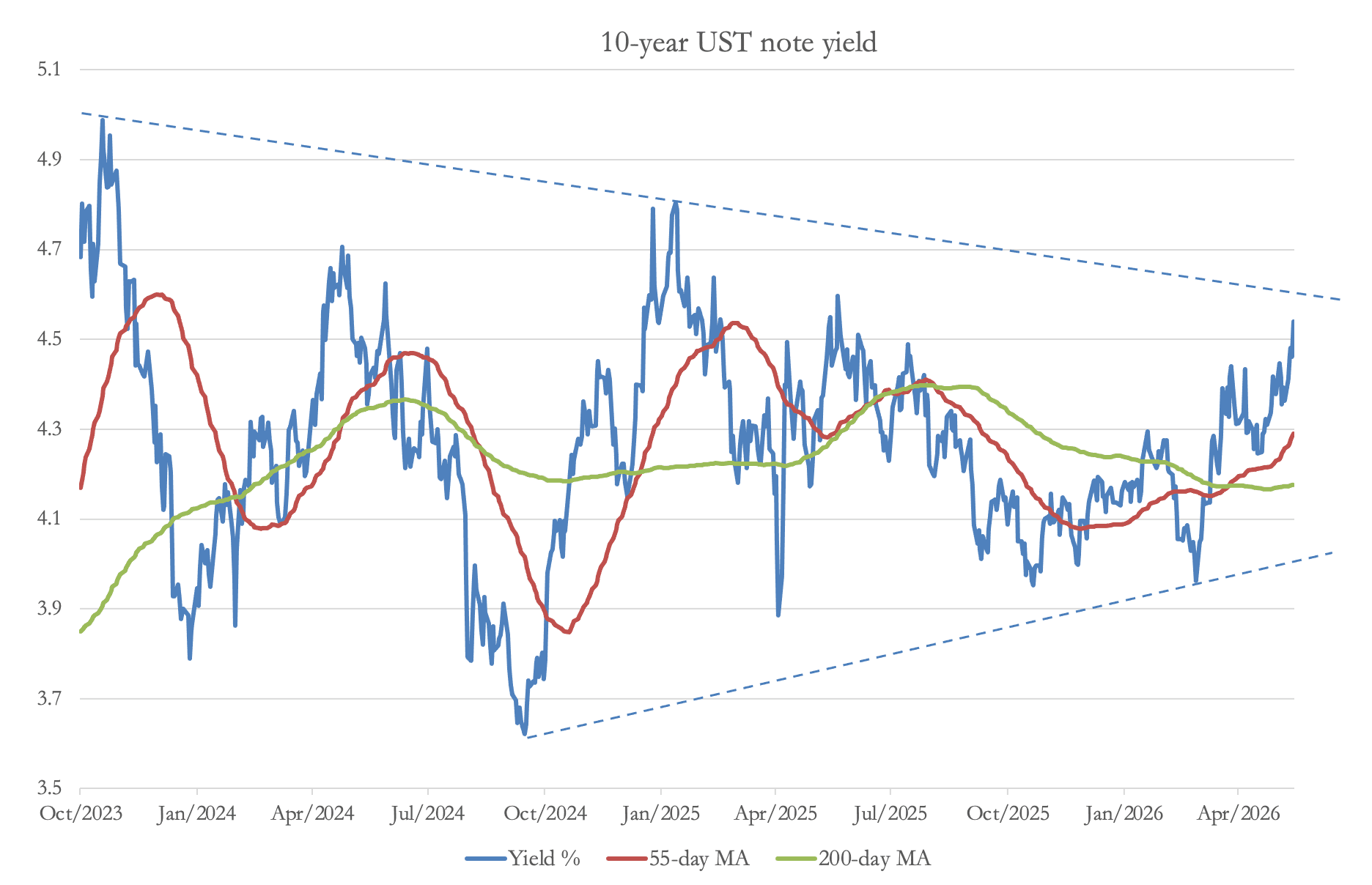
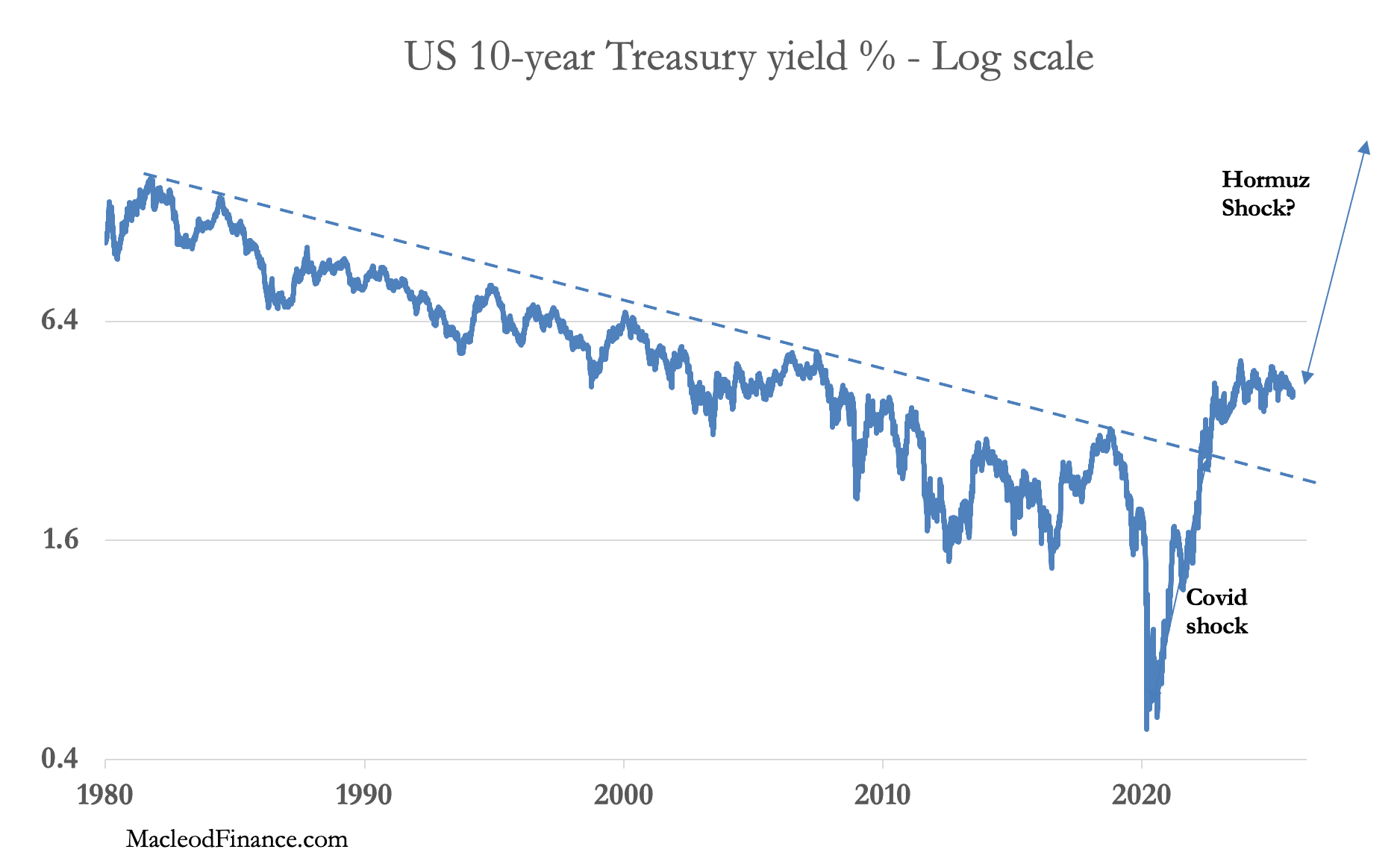
The yield is rising to test and potentially break out above the post-covid rise in yields (the upper pecked line). The long-term chart puts this in context. When yields break higher, they have the potential to at least double from current levels:
Other G7 bonds have already broken through their yield ceilings, notably Japan, the UK, Germany, and France. Canada and Italy have some way to go but like the US are also on the rise. Longer maturities are already leading the way, with the US long bond yield already testing post-covid new highs.
Clearly, measures of inflation will go significantly higher in the coming months, so bond yields in all G7 currencies will rise considerably. And as the long-term chart above of the US T-note shows it will signal a significant destruction of bond and other financial asset values.
If markets expected some relief from Trump’s visit to China this week, they will be badly let down. Cutting through the media commentary, it is clear that China may be non-confrontational, but nor will it intervene to resolve the Persian Gulf crisis. That leaves the prospect of either a continuing stalemate or an escalation by the US. Both options are globally destructive economically, ensuring a combination of a global slump and significantly higher inflation.
Meanwhile, the equity bubble continues to inflate, led by AI stocks and bitcoin which are correlating. The value divergence with bonds is already stretched to a record extent as our last chart shows:
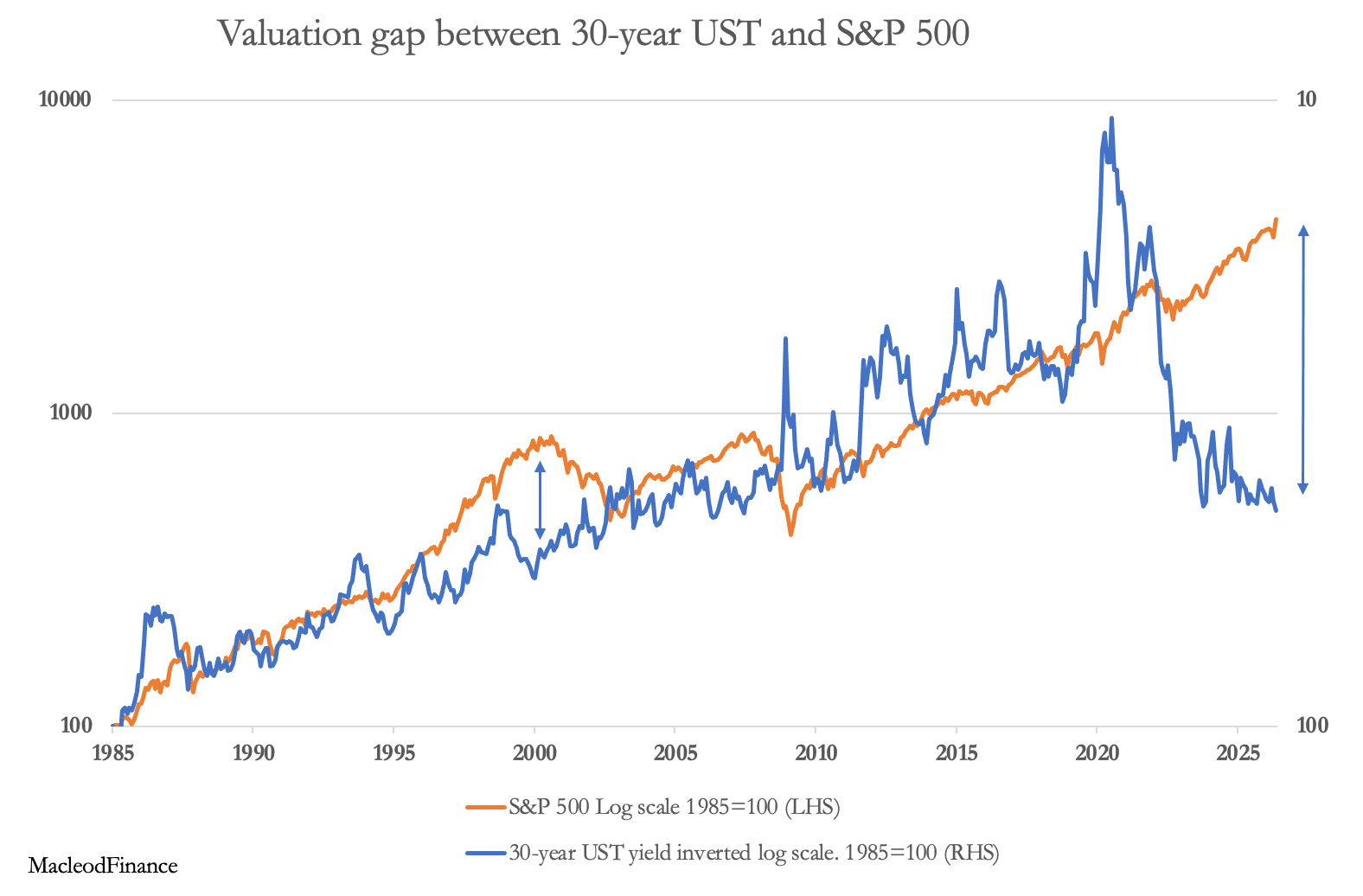
Now that bond yields are moving higher, the equity crash will be even more spectacular when it comes, probably in a matter of weeks or even days. Sell in May and go away has never been more appropriate.
For gold and silver bugs, these are the conditions which vindicates their bullishness. They will be buying into dips such as this in the knowledge that price uncertainty is increasingly short-term. A collapse in currency purchasing power is always reflected in higher gold, silver, and commodity prices. And this time, there are inescapable debt traps to boot.