
This morning, gold, silver, and oil are rallying strongly. That’s as it should be because the risk is in credit, not precious metals and commodities. Perhaps investors are waking up!
Before we get into what is happening to the world of finance, it’s worth noting the artificiality of paper markets and their values for gold and silver. The most important point is that bullish speculation in both West and East is close to all time lows, illustrated by open interest on Comex in the gold contract:
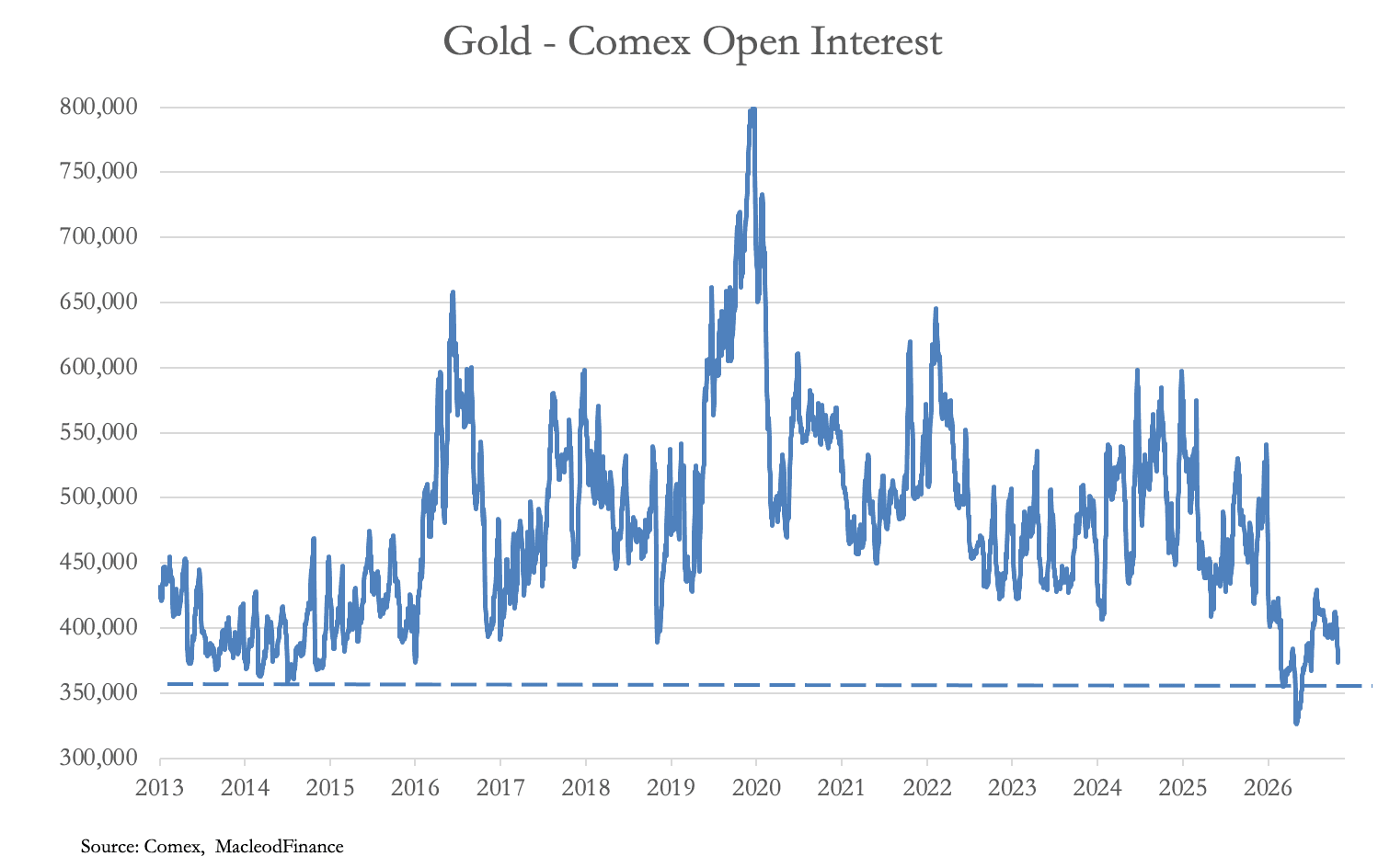
Furthermore, China’s major banks stopped offering retail leverage in July with more Chinese banks following suit in October under pressure from the Shanghai Gold Exchange. At its face, the SGE appears concerned about volatility, but it has cleared the way for the PBOC and commercial banks to acquire substantial amounts of gold. They obviously see continuing fiat currency weakness and given China’s household savings rate of over 30% ($6 trillion equivalent likely fuelling gold demand), future demand for gold accumulation accounts and ETFs as well as physical purchases requires them to be prepared.
It’s a similar oversold situation in silver, illustrated by the extremely low level of hedge fund interest on Comex:
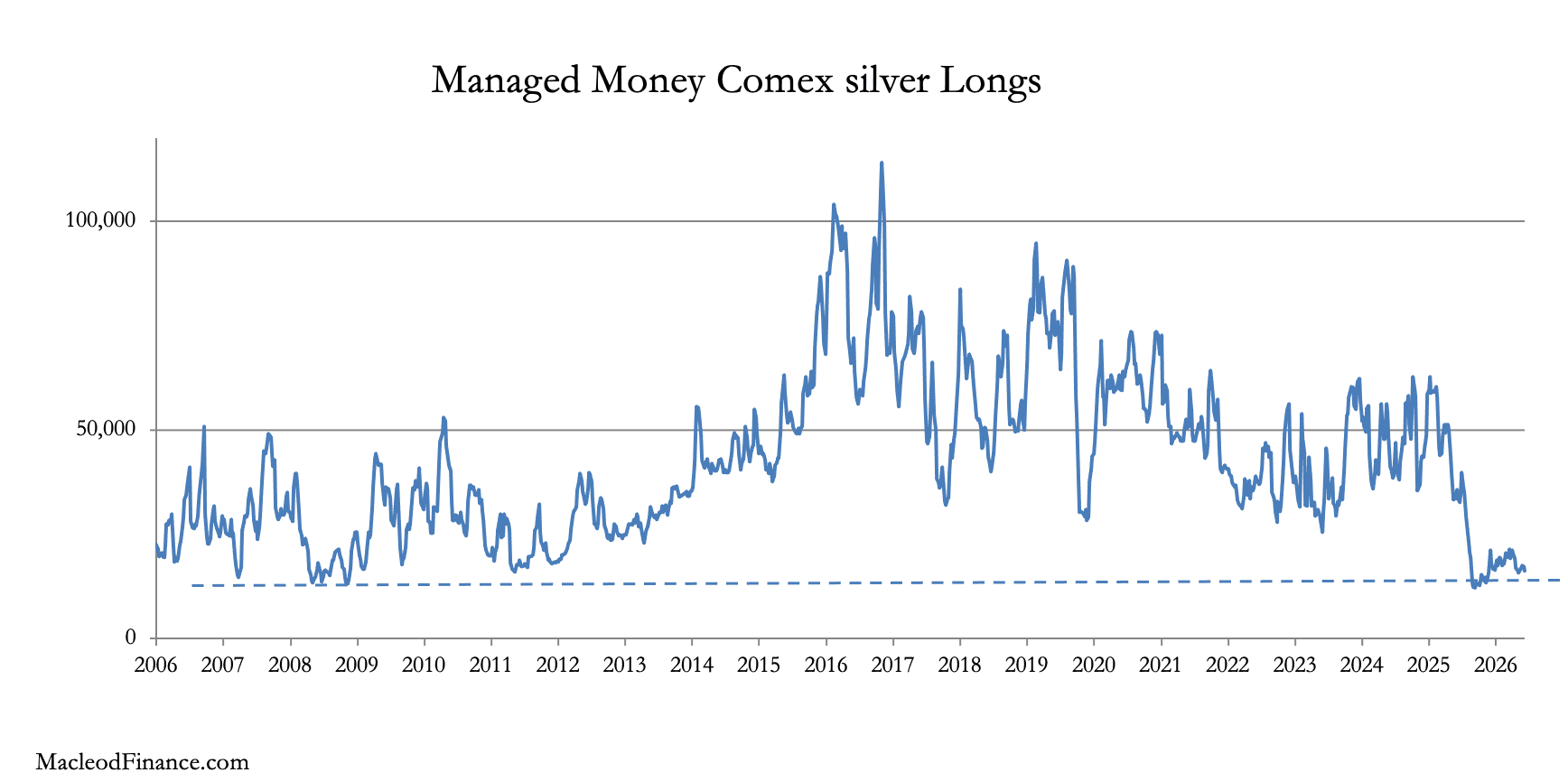
When speculators are absent, it allows bullion banks in both London and New York to push paper values to levels that suit them. Furthermore, they understand what’s happening in the physical market and the dangers of being short.
The expiry of gold’s December contract is this week. Call options expired on Tuesday, many worthless because of the vicious markdowns over the last fortnight allowing sellers to pocket the premiums. First notice of standing for delivery is this Friday, and there are still contracts to be closed, rolled into February, or stood for delivery. This pressure disappears later next week.
The point is that the slide in precious metal prices has been of enormous benefit to the bullion banking establishment. LBMA banking members and Comex swaps have booked substantial profits and China’s commercial banks have accumulated large quantities of bullion — 1,300 tonnes this year so far at giveaway prices. And the PBOC has added a further 129 tonnes of monetary gold to its official reserves.
Energy is hugely mispriced
As we approach the northern hemisphere’s winter, when oil and natural gas demand is at its greatest, there are still heavy restrictions on tanker shipping out of the Persian Gulf and the Red Sea. According to the International Energy Agency, oil exports excluding Oman amounted to 18.4 mbpd including refined products, 26% below prewar levels. But that is disputed by satellite data collated by the IMF and the Environmental Change Institute at Oxford University which shows very few shipping movements:
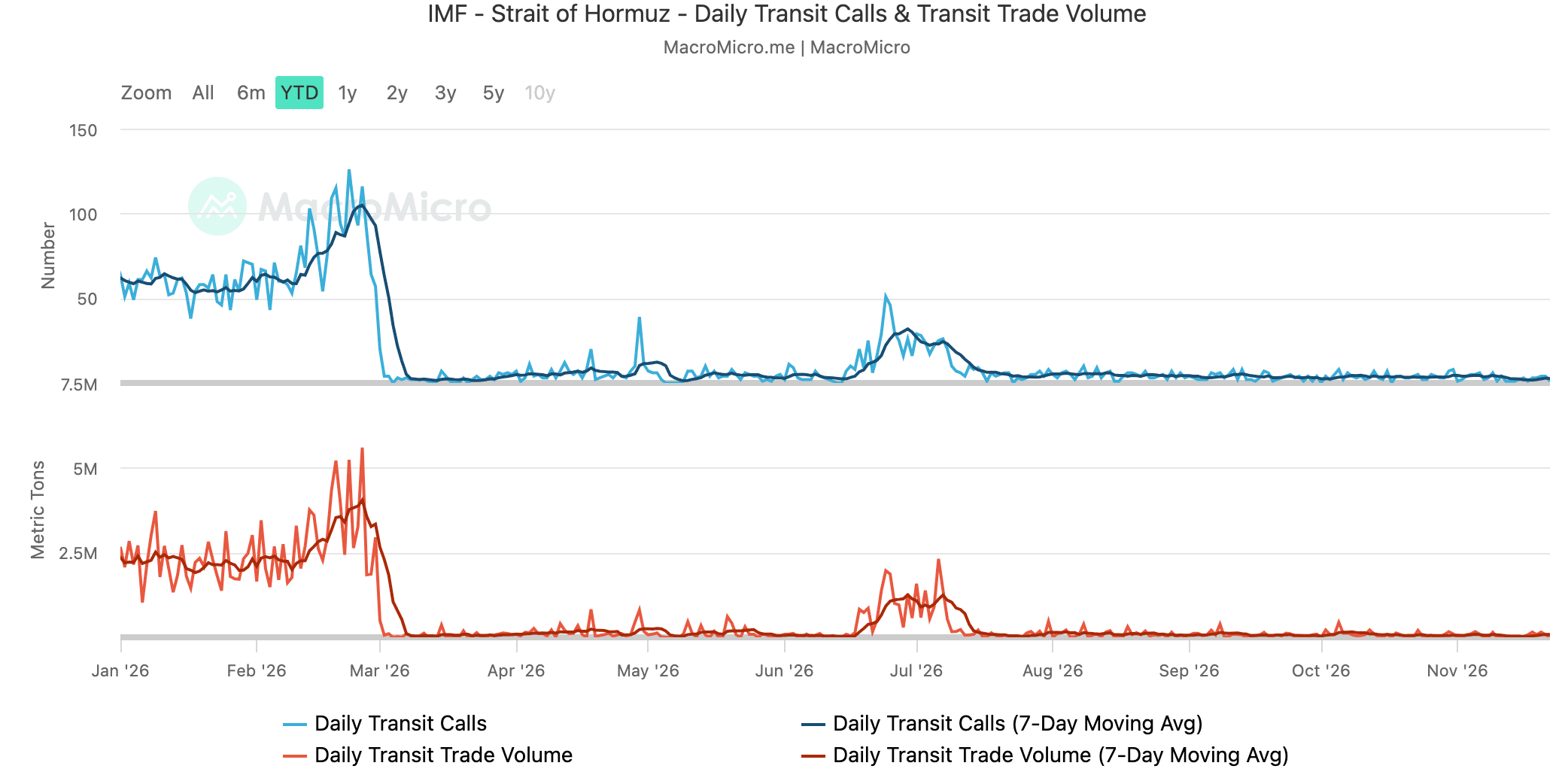
The IMF uses both satellite data and AIS transponders to track maritime flows including non-oil traffic. Its last daily record on 22nd October was one ship, and an average for last week of 2.71 per day. The disparity of shipping numbers from other sources raises a huge question mark. Furthermore, there’s the loss of Saudi oil exports not often reported. The Houthis in Yemen have effectively closed off pipeline flows to Yanbu in the Red Sea and blockaded it at the Bab el Mandab Strait. They have also hit the Saudi’s largest refinery at Ras Tanura in the Gulf. In effect, their exports have collapsed to almost nothing from 6.4 mbpd in 2025.
When the truth of the oil situation is revealed and with heightened seasonal demand we can expect to see far higher oil prices, impacting inflation rates in G7 currencies while their economies face a recession at the same time. Led by the Fed, central banks will be faced with a stark choice: do they raise interest rates to protect their currencies and to hell with the economic consequences, or do they abandon the fight to protect their currencies to rescue their economies and financial markets from a gathering economic slump?
History clearly tells us that the political imperative to protect jobs and the economy will force their central banks to abandon the inflation mandate. Therefore, we will shortly see a major decline in currency purchasing powers, a crisis led by the US dollar.
In conclusion, gold and silver appear to be extremely cheap in the context of depreciating currencies, driven lower by the factors outlined above. Credit, which includes currencies themselves is where the risk exists, not gold, silver, oil, or any other commodities.