
Investors increasingly suspect that financial markets might be radically mispriced and nowhere is this truer than for precious metals.
In terms of the evolution of gold and silver prices, markets appear to be in a similar position to where they were in December 1973, after OPEC first hiked its reference price and before the second larger increase.
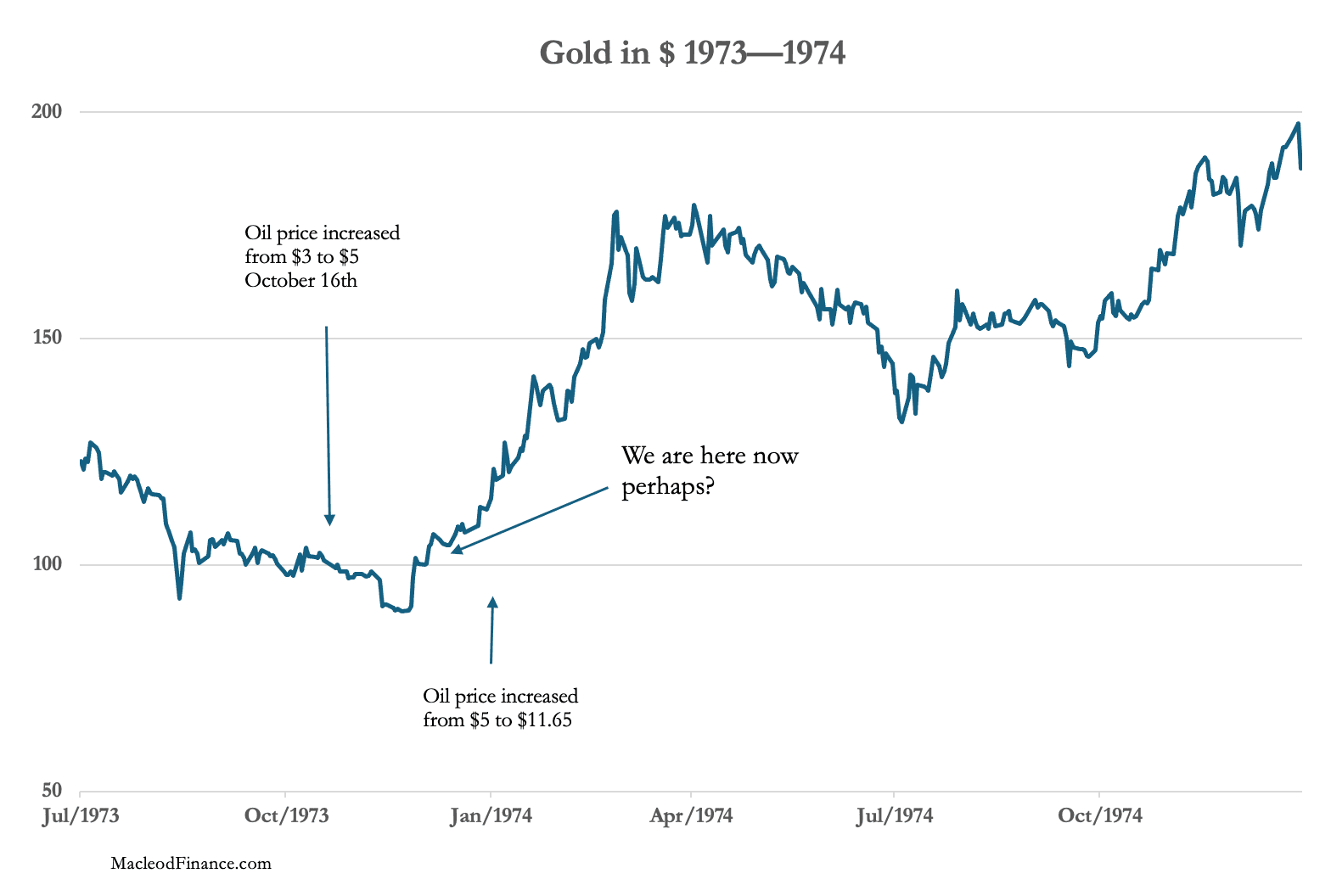
A reason for making the comparison with the position today is that price suppression by the US’s strategic reserves drawdown is coming to an end, and crude oil prices will almost certainly begin rising due to the prolonged Hormuz and now Bab el-Mandab closures. We appear to be following the 1973—1974 precedent.
Gold and silver have started moving higher with oil prices, reflected in both metal contracts on Comex. This is evident in the chart for gold and its open interest;
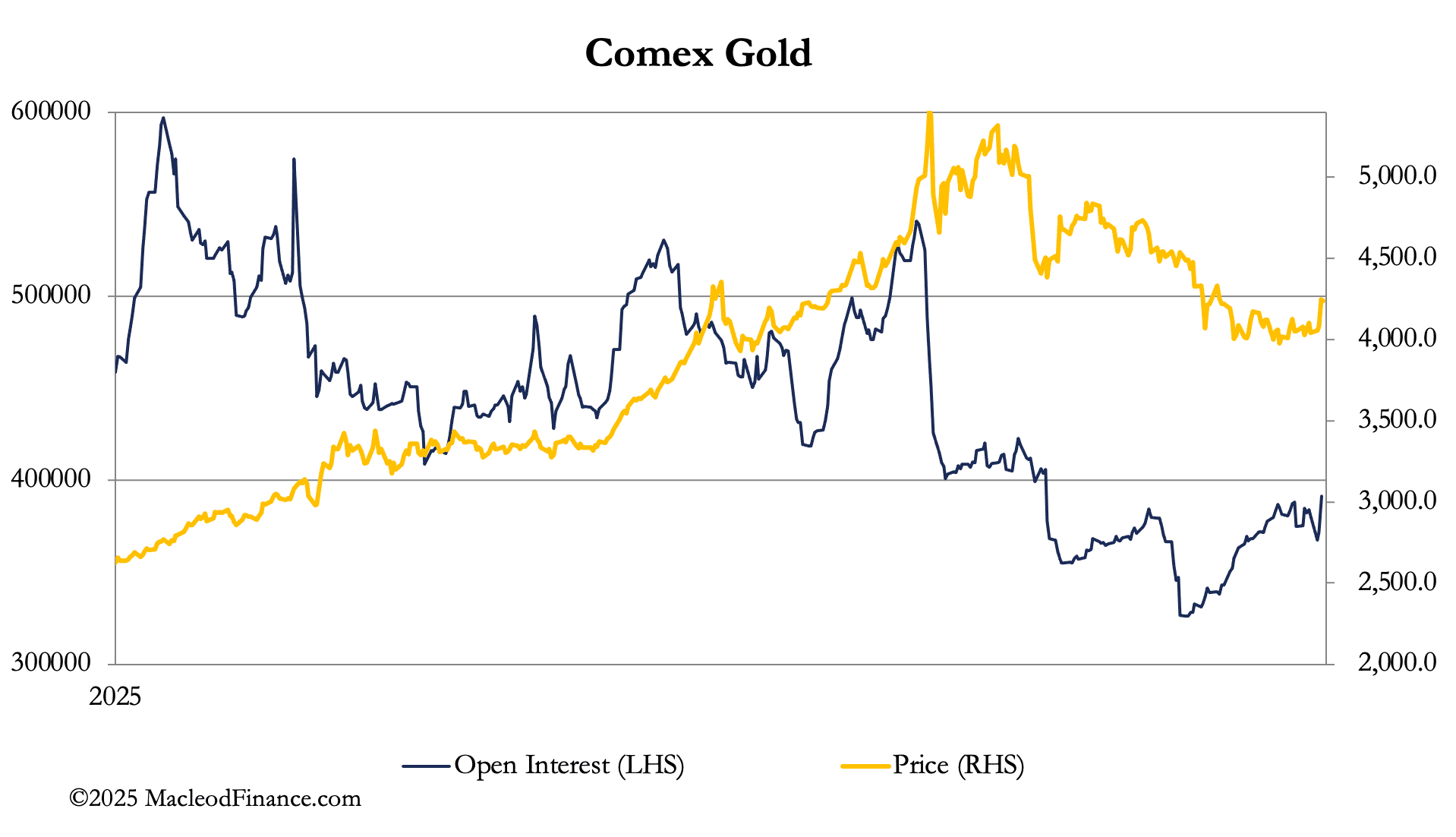
Open interest hit the lowest levels in decades in June. Since then, the managed money, other reported, and non-reported categories accumulated over 30,000 longs by end-July. The largest category at 18,493 longs is non-reported where you would expect stackers to be operating. They have been accumulating long positions in the $4,000—4,500 price range, and physical deliveries during this time totalled 19,887 contracts (61.9 tonnes).
In summary, while retail investors became increasingly despondent and many chartists with them, the big money has been stacking. And now, open interest appears to be recovering in a tight market.
What is true of gold is also true for silver:
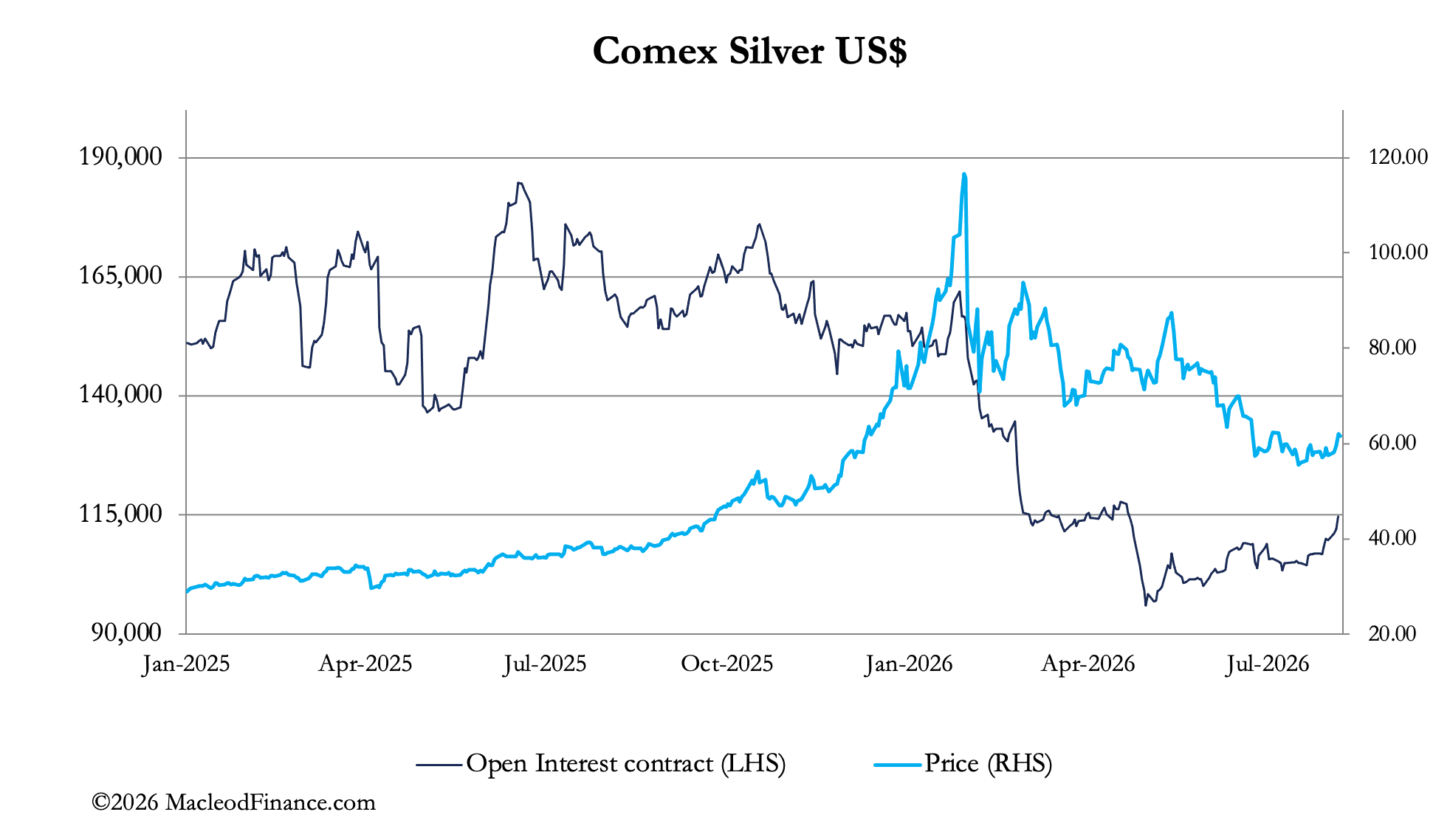
Clearly, the swaps (market makers and bullion bank traders) will be unable to reduce their short positions in both contracts, and their hedging activity will drive prices higher in London. And hedge they will, because it is an open secret why central banks are accumulating gold — to hedge out of increasing currency risk. This is probably why some very large call options dramatically out-of-the-money have been bought.
Think about that for a moment. The establishment led by central banks know that the fiat currency gig is up. We are probably close to the point where all actions by the US Treasury and the Fed will be read negatively, and they will no longer enjoy the benefit of doubt by markets. And this week provided us with an excellent example.
Secretary Bessent in conjunction with his opposite number in Japan triggered a massive bear squeeze in the yen. This is reflected in our next chart:
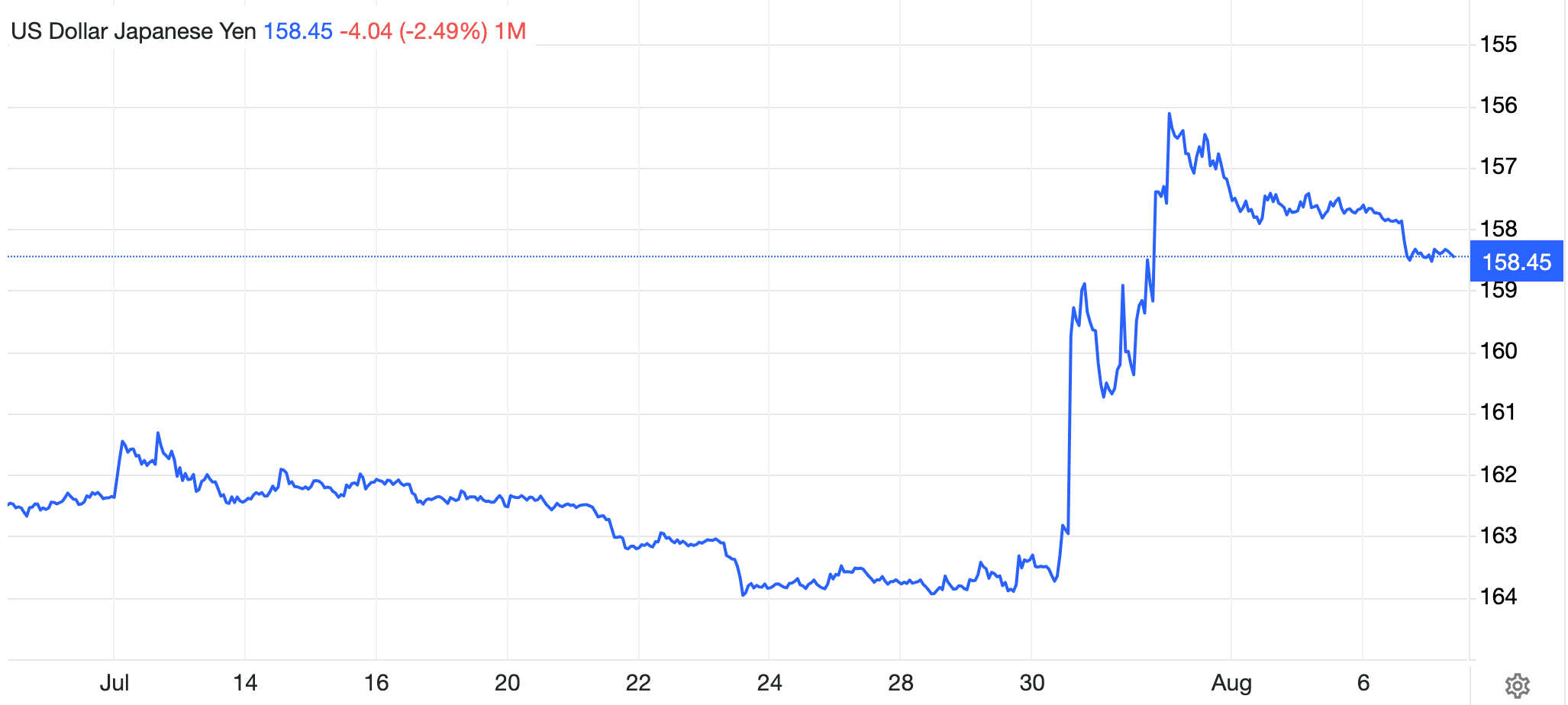
Commentators pretending to know why Bessent did this have come up with various explanations. I conclude that it is a strategic error, and I will be posting a Substack article on Sunday explaining why it is so for MacleodFinance paid subscribers. But the point here is that it benefits neither of the national treasury departments to sow confusion into markets. As the ancient Chinese proverb says,
A wise merchant sits on the hole in his carpet to protect his reputation.
Some say that Bessent intervened to discourage Japanese institutions from selling US Treasuries. But the most profitable element of a Japanese institution’s holdings in USTs comes from the falling yen. The last thing they want is interventions of this kind and are hardly likely to continue buying US Treasuries if selling yen for dollars is less profitable. And the same is true of hedge funds using short yen as the basis of their carry trade into US Treasuries.
The fact of the matter is that Japan’s government debt, already at 240% of GDP is running into the brick wall of higher borrowing costs. All Bessent’s action has done is draw attention to not just Japan’s funding problems but alerts them to the US’s as well.
Actions of this sort destabilise the faith in fiat yen and now dollars. As a wake-up call, it perhaps explains why gold and silver prices are now moving noticeably higher. This week, gold has jumped from a low point of $4030 to $4,317 at the time of writing. And silver by $8 from $56.50 to $64.50.
In other news, there appear to be belated and growing concerns in markets about the economic and inflationary consequences of the stalemate in the Middle East which show no signs of being resolved soon. Furthermore, the drawdown on US strategic oil reserves is coming to an end, which almost certainly leads to higher oil prices and higher government bond yields.
Remarkably, this is now leading to rising gold and silver prices as markets move from looking at yield differentials between metal lease rates and fiat currency interest rates, to assessing the risk of current developments to the status of fiat currencies. I repeat our introductory chart as a reminder of the last time the world faced a similar situation:
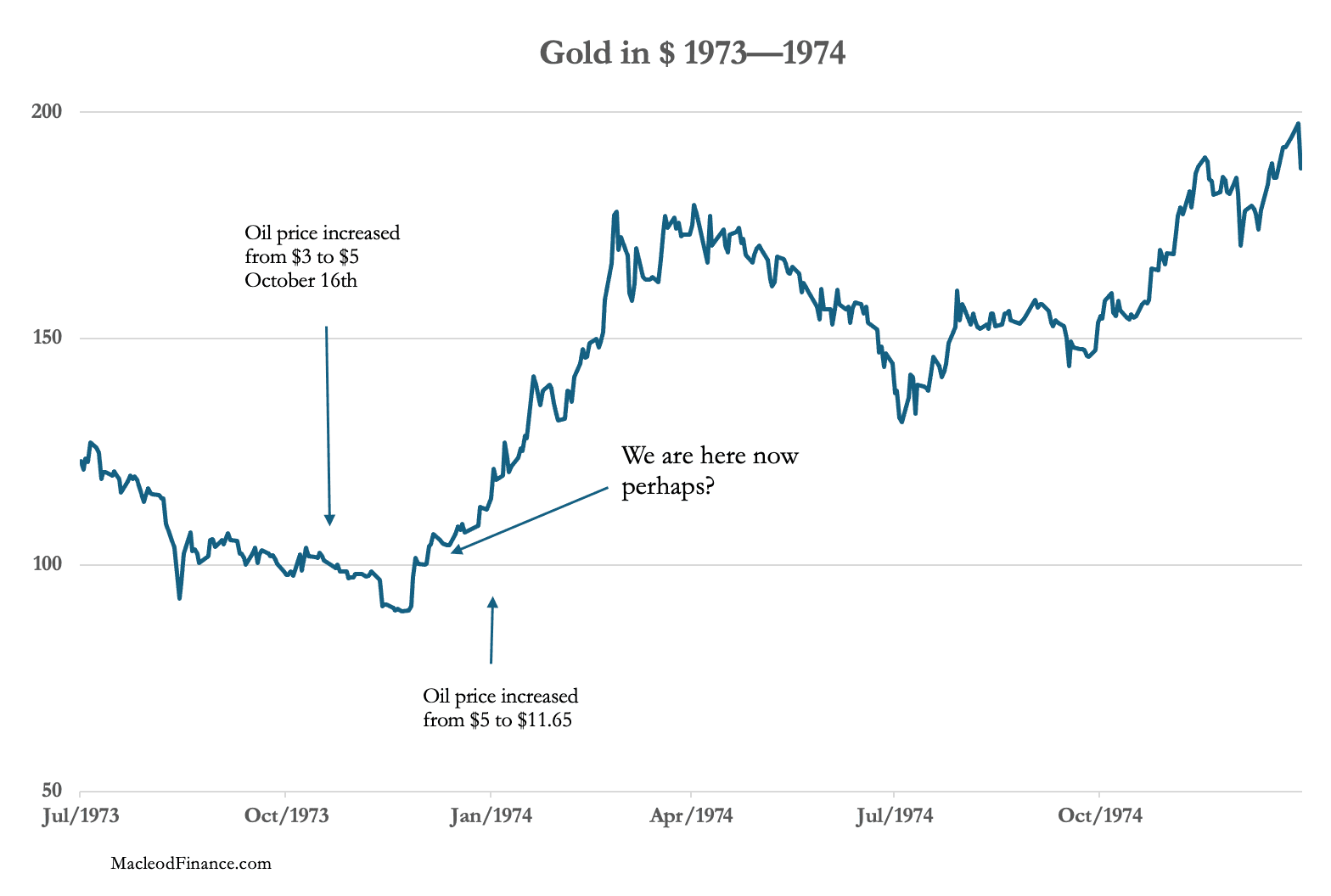
Even if events today just rhyme with those 53 years ago and gold doubles as rapidly today as it did then, the implication for the dollar is there will be a substantial collapse in its purchasing power and an existential crisis for the entire fiat currency system.