
The dilemma facing central banks is becoming visible. The Fed raised its funds rate by ¼%, Bessent suppresses bond yields, and the G7’s monetary establishment holds its breath.
Mere ¼%-step increases are unlikely to achieve price stability, because they will never catch up with the developing squeeze on fuel and food supplies. It is reminiscent of the 1970s, when the reluctance of the authorities to raise rates sufficiently to deal with the inflation problems of the day simply fuelled the price of gold.
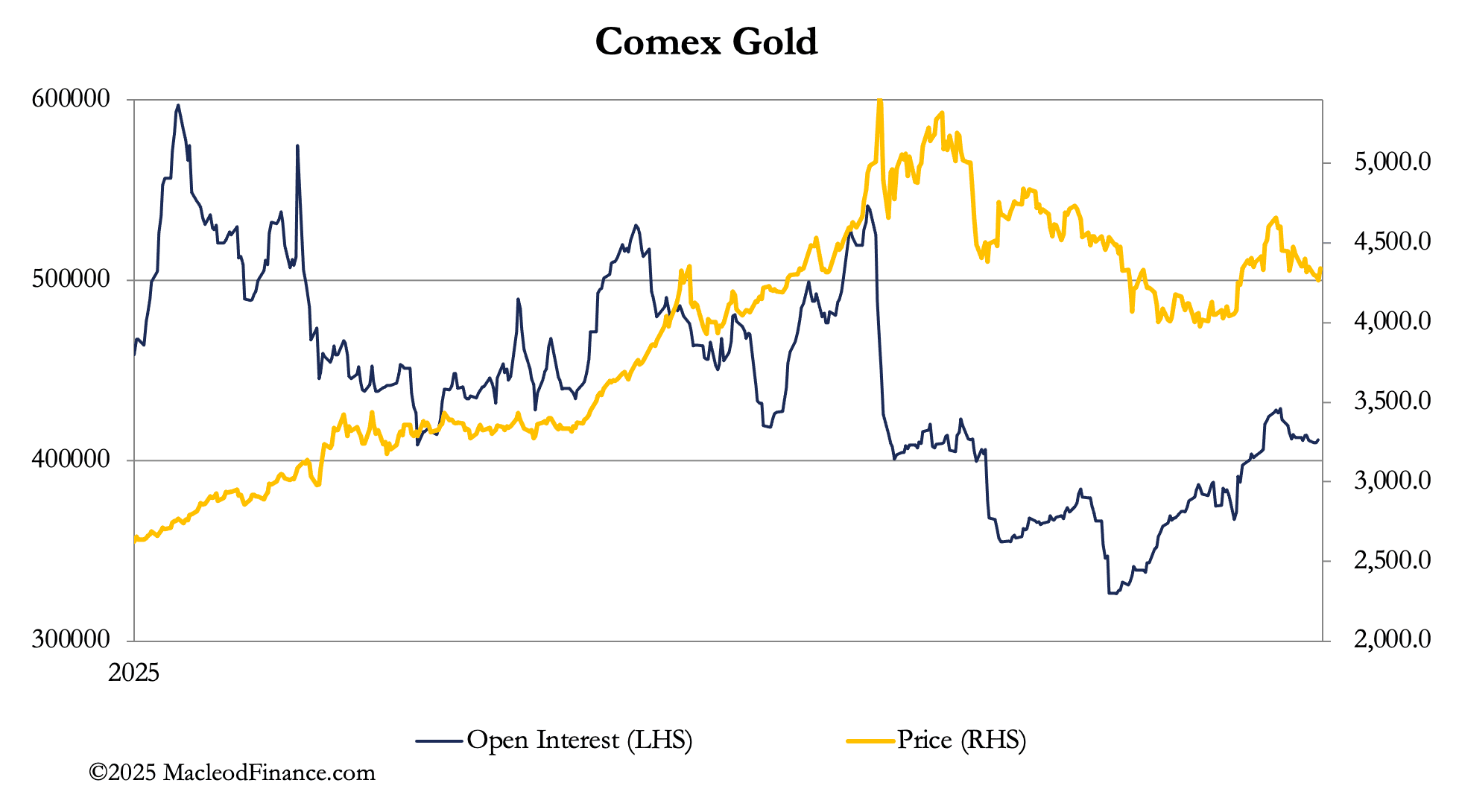
After three weeks of being on pause, the Fed’s increase of its key interest rate by ¼% on Wednesday to a 3.75%—4.00% band was the signal for precious metals to resume their new upward trend. The Fed’s move was a mirror of the ECB’s ¼% rate increase on 10th September but was not followed yesterday by the Bank of England which decided yesterday to keep its rate on hold.
A narrative that consumer price rises are muted despite oil supply disruption was developed as justification for the BoE’s wait-and-see policy. More likely, both the Fed and the Bank of England are taking political considerations into account — the Fed faced by a president demanding lower rates, and Bailey at the Bank of England deciding not to rock new-boy Burnham’s boat ahead of Healey’s late-October budget.
Meanwhile, there’s an ominous silence in media commentary over developments in the Middle East. The Houthis have taken full control of the Bab el-Mandab pinche-point and bombed or sabotaged the Saudi’s east-west pipeline which has stopped its oil exports entirely. This does not seem to be taken seriously enough yet by the mainstream media which appears to think that the Houthis are just unsophisticated terrorists. This is far from the truth.
More serious and well-informed observations point to a regional disintegration of the status quo ante, whereby sectoral and tribal factors are being unleased even threatening the existence of the Gulf’s royal houses. The closure of Hormuz and Bab el-Mandeb is only Act 1 of this tragedy.
It matters, because it is apparent even to Panglossian central bankers that what’s evolving is worse than their worst nightmares. Shortages of diesel, kerosene, and ships’ bunkers will persist as far into the future as can be seen, disrupting all logistics by land, air, and sea. Summer’s drought adds to the consumer price problem, which together with the most disruptive El Niño in recent times will guarantee serious food shortages while cereal supplies from Ukraine are cut off from world markets.
It is leading to a slump in business activity, but at the same time significantly higher prices for essentials such as energy and food. It will undermine government finances and eliminate any headroom for government interventions. Government debt-to-GDPs are set to soar from already excessive levels, due to a lethal combination of falling private sector GDPs and rapidly increasing budget deficits.
No wonder bond yields are threatening to go significantly higher. No wonder the US treasury secretary is trying to cap long bond yields. No wonder central bankers are desperate not to rock the boat.
And little wonder that gold, silver, and the entire commodity complex are seen as an escape from government and private sector credit. And technically, gold looks like turning a corner.
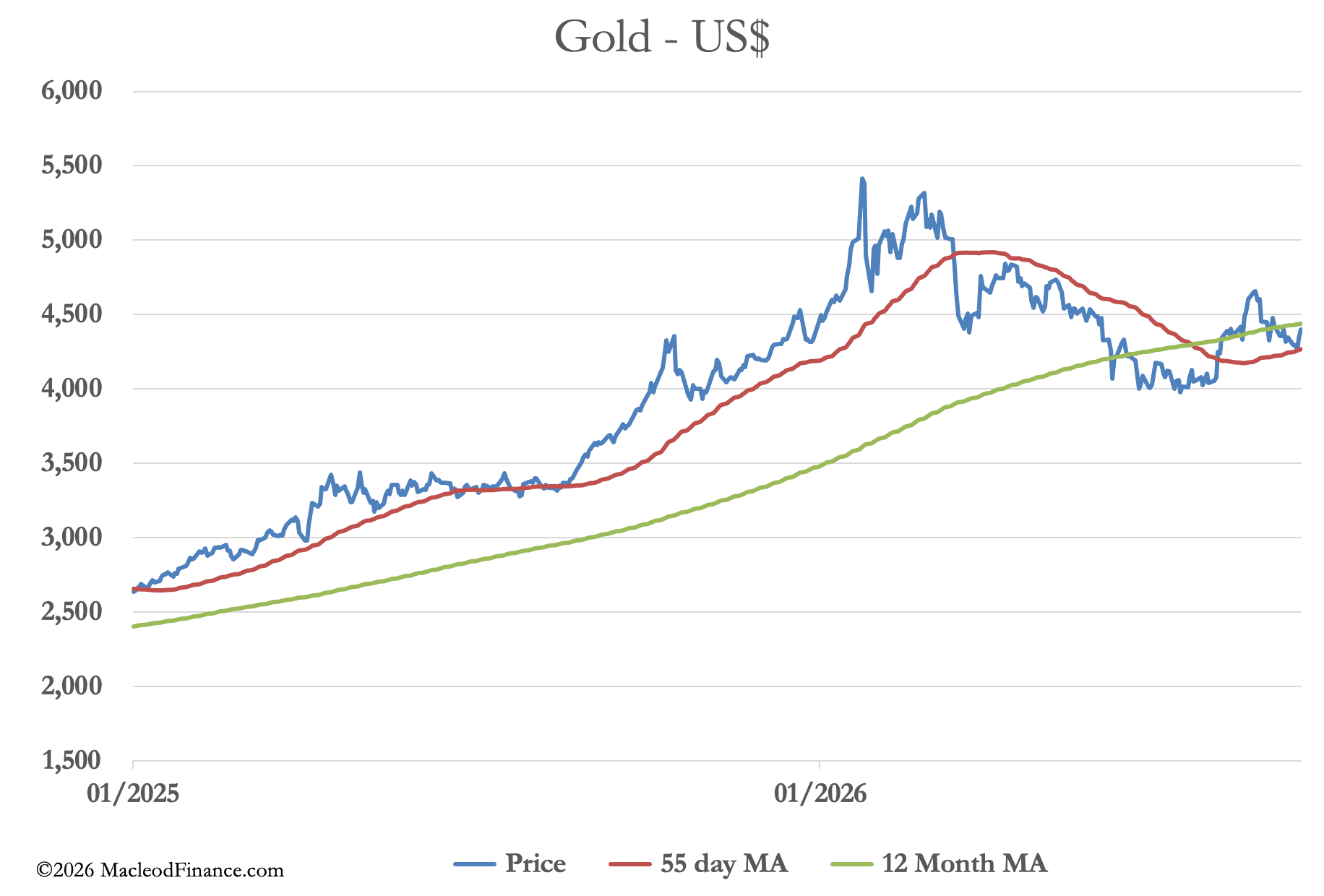
Just a little higher, and chartists will get excited. And now that the immediate uncertainty over interest rate policy has past, it looks like gold and silver are resuming a new, upward trend. But because they are under-owned, buyers are many and sellers are few.